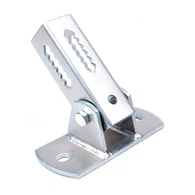

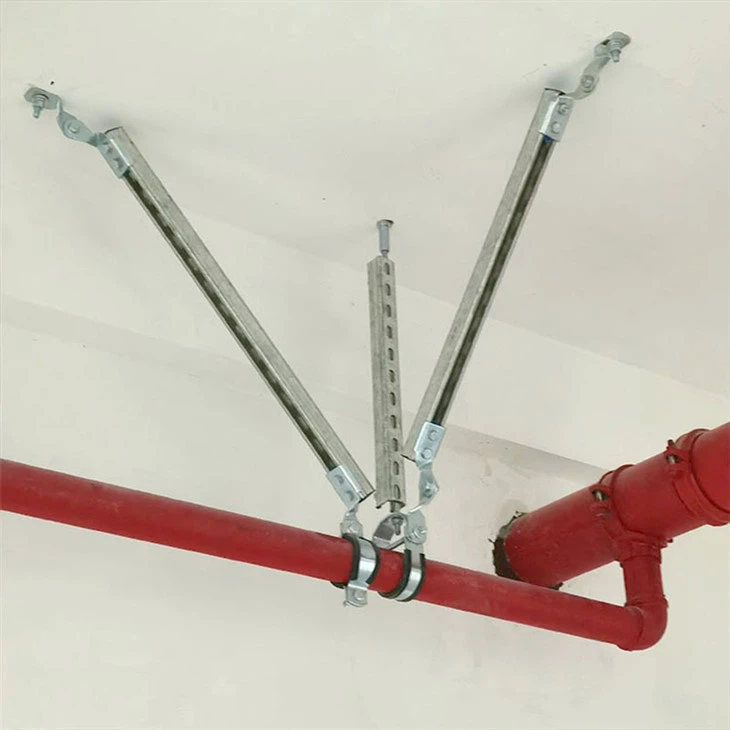
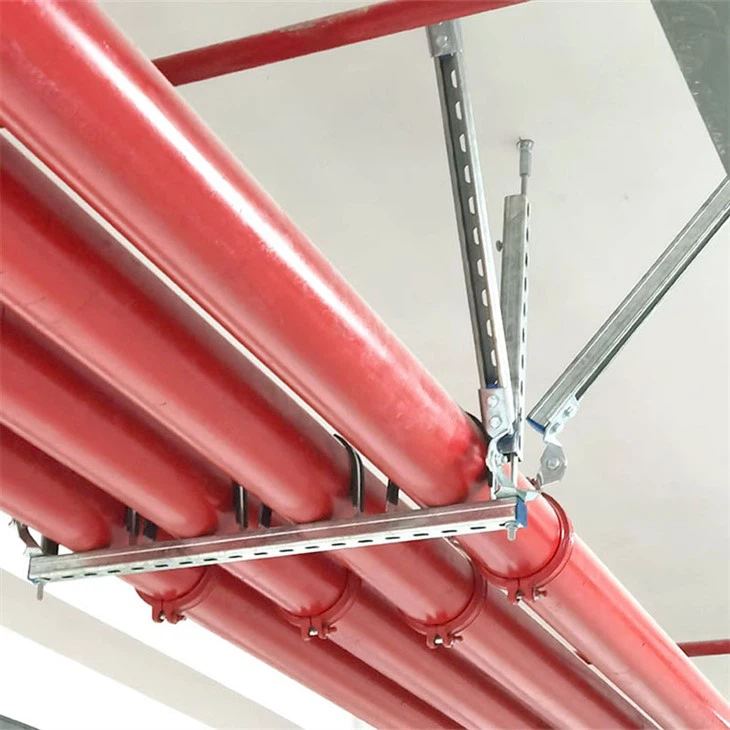
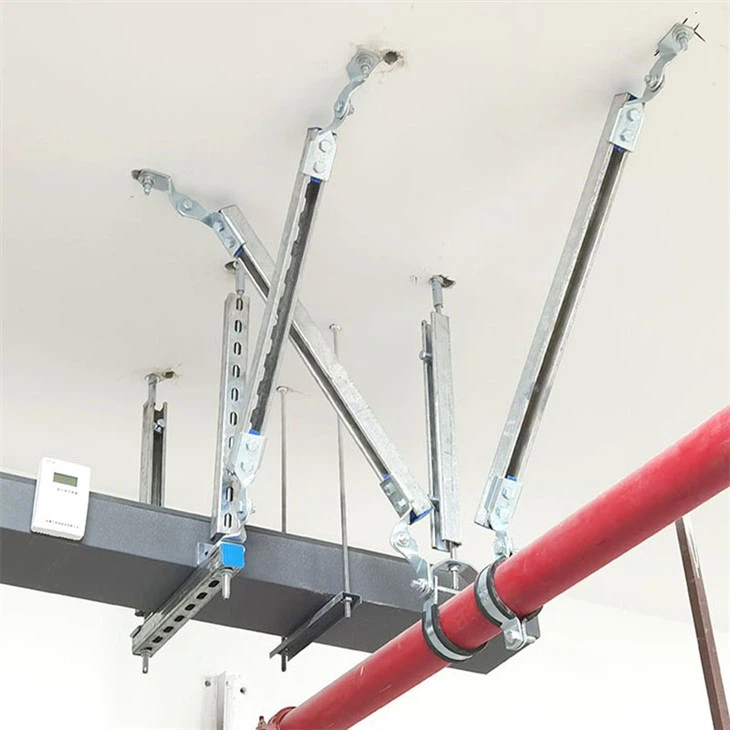
Product parameters
| Product Name: |
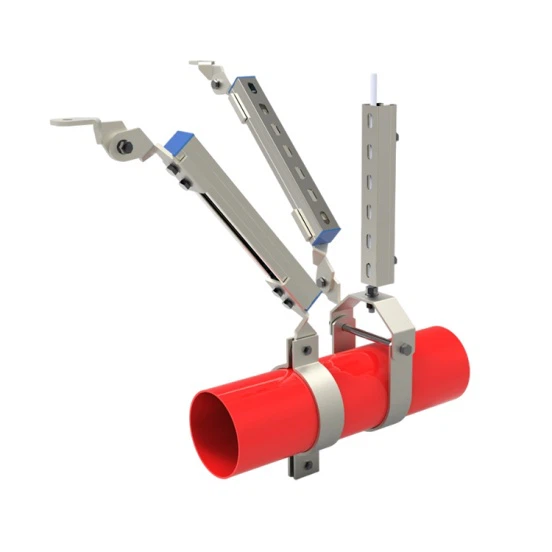
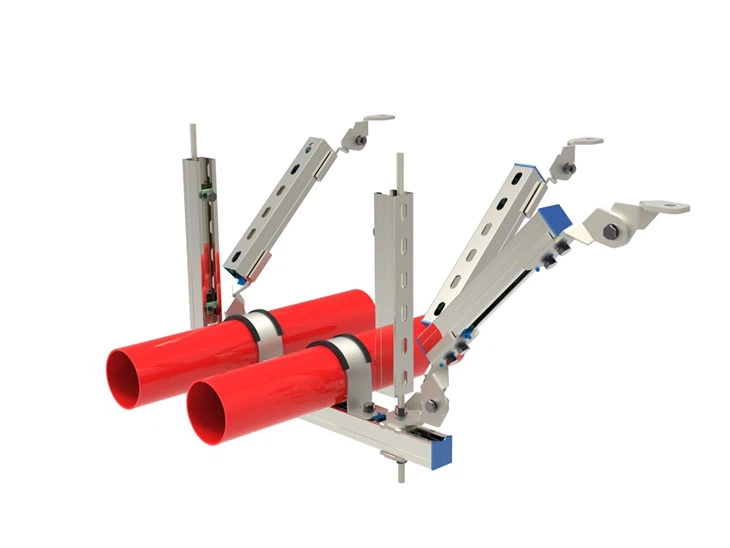
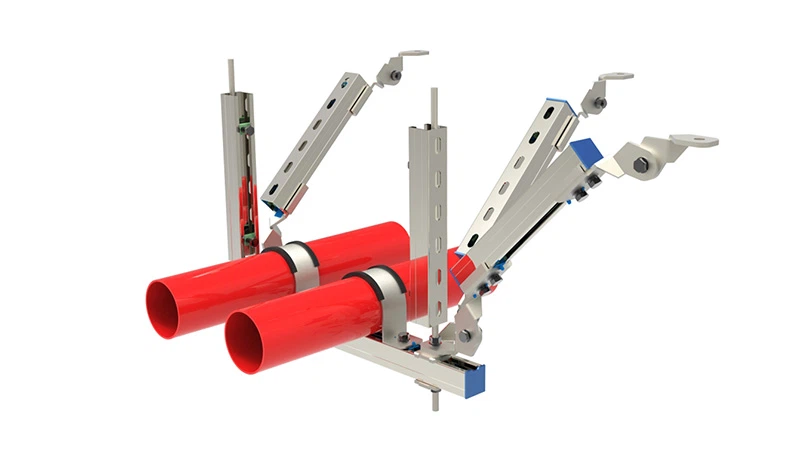
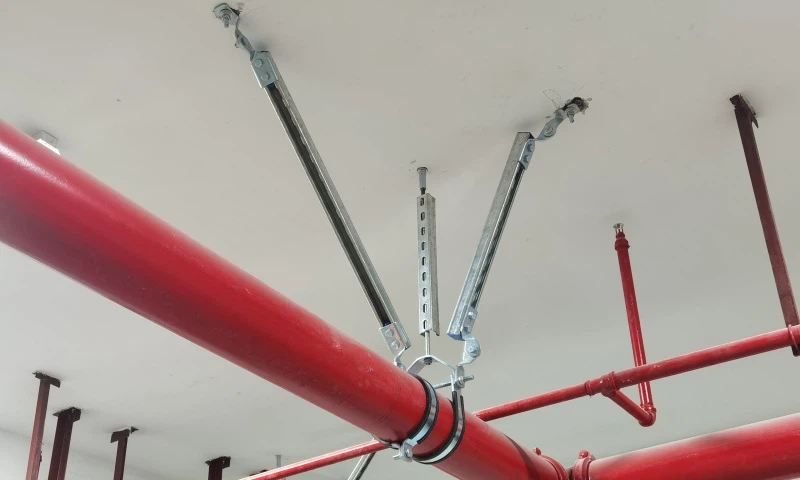
Lateral & Longitudinal Seismic Restraint For Pipes |
| Type: | pipe seismic bracing/seismic restraint system/lateral seismic brace for pipes/two-way seismic brace for pipes/two-way seismic restraint for pipes/single pipe two-way brace/multi-pipe two-way brace |
| Material: | Q235 carbon steel |
| Surface Treatment: | Galvanizing |
Other Characteristics
| Color: | Natural Color |
| Certification: | CMA/ILAC-MRA/CNAS/CE |
| Scope of application | Mechanical and electrical engineering, fire protection engineering, intelligent engineering, industrial equipment, nuclear power and other fields |
| Use cases | Residential buildings, office buildings, shopping malls, hospitals, schools, industrial plants, hotels, subways, utility tunnels, and other similar locations. |
| Non standard specifications are availabe according to customer's requirement. | |
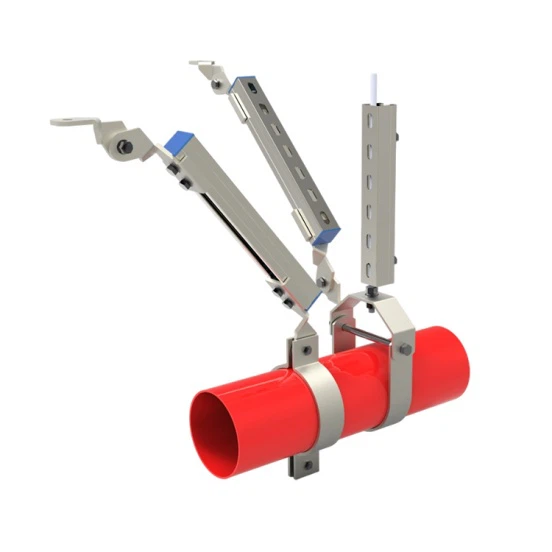
Key Features of Two-Way Seismic Braces for Water Pipes
The core characteristic of bidirectional seismic braces for water pipes lies in their integrated design that provides multi-dimensional restraint. Unlike conventional supports, they not only resist pipeline oscillation through lateral bracing but also suppress axial telescopic displacement via longitudinal limit stops. This three-dimensional restraint mechanism functions like a "3D safety belt" for pipelines, maintaining them within safe displacement limits during multi-directional seismic shaking. Their structure undergoes precise engineering calculations and utilizes high-strength steel with seismic-specific components to ensure continuous and reliable load transfer paths. Typically deployed at critical locations such as pipeline direction changes and equipment interface sections, these braces employ a balanced rigid-flexible design that ensures seismic safety while accommodating normal thermal expansion and contraction requirements, making them essential protective devices for modern building lifeline systems.
Why can ordinary pipe supports not replace two-way seismic braces?
Functional Positioning
Ordinary supports only bear vertical gravity loads, while two-way seismic braces are specifically designed to resist horizontal seismic forces, capable of simultaneously restraining pipeline lateral oscillation and longitudinal displacement.
Mechanical Mechanism
Ordinary supports use rigid fixation or simple hanging structures, which may fail due to stress concentration during earthquakes; two-way seismic braces incorporate specially designed hinged mechanisms and damping devices that absorb seismic energy while limiting displacement.
Safety Standards
Ordinary supports do not require seismic testing verification, whereas two-way seismic braces must meet stringent dynamic load testing standards (such as ASTM E580), with their anchoring systems requiring professional calculation and validation.
System Integration
As an organic component of the building's seismic system, two-way seismic braces must comply with seismic code requirements for installation location and spacing, forming a complete force transmission system with the building structure.

Hot Tags: lateral & longitudinal seismic restraint for pipes, China lateral & longitudinal seismic restraint for pipes manufacturers, suppliers, factory