



Cable Tray Accessories
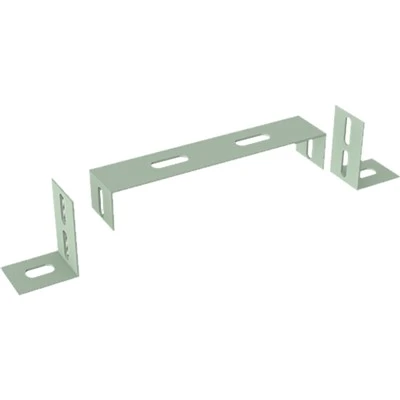
Cable tray accessories are accompanying equipment, supporting the cable tray ladder to function well. The task of cable tray accessories is mainly to connect the cable tray ladders according to different shapes and pipes to match the equipment installation location.
Advantages of Cable Tray Accessories
Versatility
Cable tray accessories are available in a wide range of forms and sizes. This allows them to be compatible with various types and sizes of cable trays. The versatility of these accessories ensures a proper fit and seamless integration with the cable tray products.
Quick and flexible deployment
Cable tray accessories are designed for quick and easy installation. They enable efficient cable routing and provide flexibility in adapting to changes or additions in the cable system. This helps save time and labor during installation and allows for future modifications as needed.
Cable routing efficiency
Cable tray accessories help route cables neatly and efficiently, preventing clutter, tangles, and potential damage during installation or maintenance.
Safety enhancement
Many accessories, such as covers and dividers, contribute to safety by protecting cables from environmental factors, reducing the risk of electrical hazards, and preventing accidents caused by loose cables.
Cost-effectiveness
Appropriate accessories shorten installation times, save labor expenses, and increase cable tray systems' longevity.






Why Choose Us
Our factory
Our company is a professional manufacturer of electrical equipment products such as cable trays and seismic brackets. It is also a comprehensive electrical technology solution service provider that integrates research and development, production, sales, installation and after-sales support services.
Professional team
Our company has a professional technical team including (quality management team, professional design team, technical research and development team), constantly upgrading product technology, optimizing product quality, and having a talent reserve at a leading level in the industry.
Advanced equipment
Our company has leading domestic product production technology and advanced mechanical equipment, reform and innovation, continuous improvement, and constantly breaks through the original business pattern, striving to explore new business markets.
Excellent service
Integrity is rooted in society, quality creates the future, and Suzhou Shihao Technology's service capabilities and business scope continue to improve, forming a standardized, professional, and comprehensive service system.
Horizontal bend for cable trays
Horizontal bends are essential for navigating cable trays around corners and bends. These accessories allow for smooth cable routing, minimizing the risk of cable damage and ensuring efficient space utilization.
Vertical inside bend for cable trays
Vertical inside bends facilitate upward cable routing within the tray system, ensuring efficient cable management in vertical installations.
Vertical outside bend for cable trays
Vertical outside bends enable downward cable routing, complementing the versatility of cable tray systems in multi-level installations.
Tee bend for cable trays
Tee bends provide a branch-off point for cables, allowing for expansions or distribution within the cable management system.
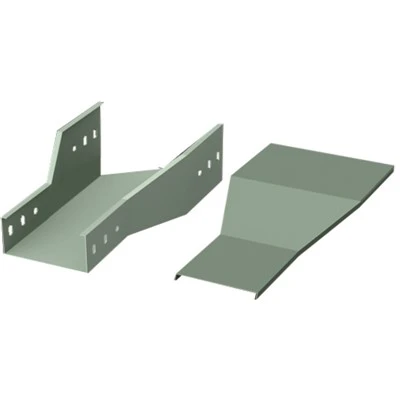
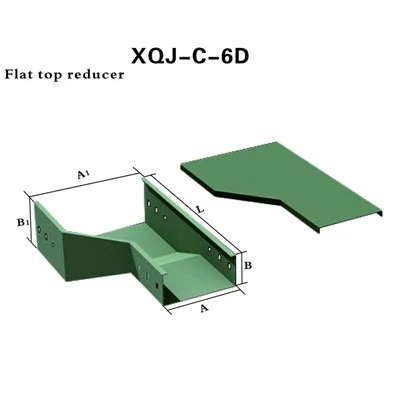
Reducers
Reducers facilitate the transition between different sizes of cable trays, ensuring seamless connectivity and adaptability in complex installations.
Cross bend for cable trays
Cross bends allow cables to traverse perpendicular directions within the tray system, accommodating intricate layout requirements.
Tray joiner/coupler
The tray jointer or coupler is a key accessory used to connect two cable trays together. It ensures a secure and reliable joint, maintaining the structural integrity of the cable tray system.
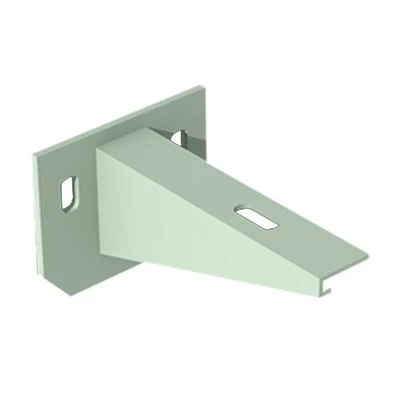
Wall mounted bracket
Wall mounted brackets are used to secure cable trays to walls or vertical surfaces. They provide stability and support to the cable tray system, ensuring it remains securely attached.
Cable tray cover/lid
Cable tray covers or lids are used to enclose the cable tray, providing protection against dust, debris, and potential hazards. They enhance safety and aesthetics, ensuring the cables are shielded while allowing easy access for maintenance.

Data centers : Cable tray accessories are crucial in data centers, where efficient cable management is essential to maintain the integrity of data and power systems.
Industrial facilities : Manufacturing plants, refineries, and processing facilities rely on these accessories to organize and protect cables in challenging environments.
Commercial buildings : Cable tray accessories enhance cable organization in offices, shopping malls, hospitals, and other commercial spaces.
Transportation infrastructure : Airports, railway stations, and tunnels use cable tray accessories to manage cables for lighting, security systems, and communication networks.
Renewable energy : Solar farms and wind energy installations utilize these accessories to support extensive cable networks.
Size variations
Cable tray accessories come in various sizes to accommodate different installation needs and cable management requirements. Understanding the available sizes and selecting the right ones is crucial for ensuring a proper fit and efficient operation of your cable tray system.
● Standard sizes: Many cable tray accessories are available in standard sizes designed to fit the most common cable tray dimensions. These standard sizes typically include popular options such as 2-inch, 4-inch, 6-inch, and 12-inch fittings. Standard elbows, tees, and connectors are commonly used in both residential and industrial applications, providing a reliable solution for most cable routing needs. These fittings are designed to match the typical dimensions of cable trays, ensuring ease of installation and compatibility with existing systems.
● Custom sizes: For projects with unique requirements or unconventional setups, custom-sized cable tray accessories offer a tailored solution. Custom fittings can be manufactured to match specific dimensions, angles, or configurations that are not available in standard sizes. This flexibility is particularly beneficial for complex installations where precise fitting is crucial, such as in large-scale industrial facilities or specialized communication setups. Custom fittings ensure that all connections and transitions are secure and aligned correctly, enhancing the overall efficiency of the cable management system.
Choosing the right size
Selecting the appropriate size for cable tray accessories involves several considerations:
● Cable tray dimensions: Ensure that the fittings match the dimensions of your cable trays. This includes checking the width, height, and depth of both the trays and the fittings to guarantee a proper fit. Mismatched sizes can lead to installation difficulties and potential safety issues.
● Project requirements: Consider the specific needs of your project, including the type and volume of cables being managed. For example, larger cables or higher cable volumes may require larger or more robust fittings to accommodate the load and ensure effective cable management.
● Application type: Different applications may require different sizes and types of fittings. For instance, a complex industrial setup may need larger or more customized fittings compared to a standard commercial installation. Evaluate the functional requirements of your project to determine the best fitting sizes.
Material: Check the material of each fitting, such as steel, aluminum, or fiberglass. The choice of material affects durability, corrosion resistance, and suitability for different environments.
Size: Ensure the fittings match the dimensions of your cable trays. The catalogue should provide detailed size specifications to ensure compatibility with existing tray systems.
Compatibility: Look for information on how each fitting integrates with different types of cable trays. Compatibility ensures a seamless connection and proper support for your cable management setup.
Specifications: Review technical details such as load ratings, installation requirements, and environmental resistance. These specifications help determine the suitability of the fittings for your specific application.

Cable ties: Enhancing safety
Cable tie play a crucial role in improving safety by:
● Preventing tripping hazards: Loose and tangled cables can pose a serious tripping hazard, especially in high-traffic areas. By bundling and securing cables together with cable tie, the risk of accidental trips and falls is significantly reduced.
● Minimizing electrical hazards: When cables are neatly bundled and secured, they are less likely to become dislodged or damaged, reducing the risk of exposed live wires, which could potentially cause electric shocks or fires.
● Improving cable identification: Color-coded or labeled cable tie can aid in the identification of different cable types or circuits, minimizing the risk of accidental disconnections or damage during maintenance or repairs.
Cable drop-outs: Ensuring safe cable routing
Cable drop-outs contribute to safety by:
● Preventing cable strain: Without designated cable exit points, cables may be forced to bend at sharp angles or be routed in ways that could cause strain and potential damage. Cable drop-outs allow for proper cable routing, reducing the risk of insulation breakdown or conductor damage.
● Minimizing obstructions: Haphazardly routed cables can create obstructions and potential trip hazards. Cable drop-outs ensure that cables are routed in a controlled and organized manner, minimizing such hazards.
● Facilitating cable maintenance: By providing dedicated exit points, cable drop-outs make it easier to access and maintain cable tray safety, without the need for complex rerouting or excessive cable handling.
Each different construction project will have a different cable tray system. A thorough understanding of the general installation process of the cable tray ladder system is essential to ensure the progress of the project. The following are 7 important steps when installing cable tray accessories for the project:
Step 1
Determine the power chute routes according to the construction drawings of the project. Next, determine the dimensions from the reference shaft to the installation site. Then, mark the mounting position of the route control chute details (angle, end, branch) and route size according to the detailed reality (up/down, branching, redirecting,…. ). From there, determine the points to hang the chute and where to drill or create technical holes in the structure.
Step 2
Carry out drilling or welding operations on the structure to install expansion bolts and mount hangers or brackets at the marked position. At the same time, make sure the chute line is straight and oriented according to the predetermined axes. Then, drill or punch holes through the structure at the predetermined positions and. Treat the hole by surfacing, smoothing, or buffing.
Step 3
Install the cable tray on the installed supports and according to the design with the order: Install the terminal, corner, and branch details first and then install the straight segments connecting these details. Note: With straight sections, the steel edge of the cut must be ground or painted before continuing to connect the next chute to the pre-assembled cable tray.
Step 4
Connect equipotential wires at cable tray joints required by customers. Next, install barriers, support structures, and insert gaps at positions through the building structure by the specifications.
Step 5
Check and complete the installed cable tray system: Elevation, order of trough layers, distance between layers and standard axis, horizontal or vertical and solid axis, no deformed… besides, check, add and tighten the bolts connecting the cable tray. To ensure safety, it is recommended to remove the sharp edges of the trough edge, the cuts and paint those locations.
Step 6
Check and mark the completed gutter route on the construction drawing of the project. In addition, it is necessary to consult the inspection and acceptance of construction test samples. After that, clean up excess materials, keep the construction area tidy.
Step 7
After all cable pulling work is completed, continue to check and repair cable trays if they are deviated due to construction, and then install the cable tray cover.
Our Factory
Suzhou SCHHOW Electrical Technology Co., Ltd. was established in 2018 and is located in Suzhou, Jiangsu Province, known as the "Jiangnan Water Town". It is a professional manufacturer of electrical equipment products such as cable trays and seismic brackets. It is also a comprehensive electrical technology solution service provider that integrates research and development, production, sales, installation and after-sales support services.
The company has a complete organizational structure, strong technical strength, and complete facilities and equipment. It has a professional research and development, sales, and after-sales service team, with 8 years of intensive cultivation in the industry. Shihao Technology adheres to the business philosophy of "integrity based on society, quality creating the future", introduces international advanced technology, innovatively develops and enriches product categories, and tirelessly pursues excellent quality to meet market demand. So far, the company's products have been widely used in many fields such as construction, chemical industry, textile, machinery, shopping malls, hospitals, residential areas, etc. By relying on continuous improvement in craftsmanship, quality, and high-quality services, they have received unanimous praise from customers and gradually achieved an outstanding leading position in the industry.


FAQ
As one of the leading cable tray accessories manufacturers and suppliers in China, we warmly welcome you to wholesale cable tray accessories in stock here and get free sample from our factory. All customized products are with high quality and competitive price.
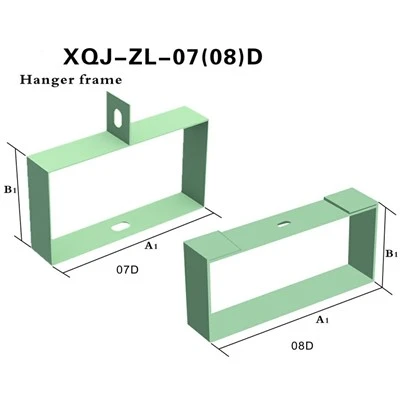
Vertical Upward Bend, Cable Tray Ground Wire, Four Sided Cable Tray Suspension Frame