

Product parameters
| Product Name: |
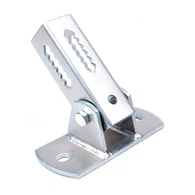
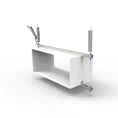
Lateral Seismic Restraint For Ductwork |
| Type: | seismic restraint for air ducts/seismic restraint system/seismic hanger assembly for ductwork/duct seismic bracing/duct seismic brace/seismic restraint for ductwork/duct lateral seismic brace/duct lateral seismic bracing |
| Material: | Q235 carbon steel |
| Surface Treatment: | Galvanizing |
Other Characteristics
| Color: | Natural Color |
| Certification: | CMA/ILAC-MRA/CNAS/CE |
| Scope of application | Mechanical and electrical engineering, fire protection engineering, intelligent engineering, industrial equipment, nuclear power and other fields |
| Use cases | Residential buildings, office buildings, shopping malls, hospitals, schools, industrial plants, hotels, subways, utility tunnels, and other similar locations. |
| Non standard specifications are availabe according to customer's requirement. | |

How Duct Lateral Seismic Braces Resist Horizontal Seismic Forces?
The core and most specialized function of duct lateral seismic bracing is to resist horizontal seismic forces, preventing the duct system from lateral swaying, twisting, or overturning. Unlike ordinary hangers that only bear vertical weight, it uses a specially designed diagonal bracing system to transfer the horizontal inertial forces on the duct to the main building structure through a clear path.
The key to this system lies in its triangular stabilizing structure-typically composed of an adjustable-length seismic-resistant diagonal brace and a main channel steel. When an earthquake causes the duct to attempt to sway left and right or back and forth, this diagonal brace immediately engages, bearing tension or compression, acting like a "support rod" to direct the swaying energy to the floor slab or walls. This not only prevents the duct itself from tearing at the connection points but also avoids impacts to other critical equipment or structures due to the massive duct swaying, effectively ensuring the normal functioning of lifeline systems such as ventilation and smoke extraction after an earthquake.
Functional Scenarios, Structure, and Installation Key Points of Lateral Seismic Bracing for Air Ducts
Lateral seismic bracing for ductwork is a key component of seismic-resistant duct systems. Specifically designed to withstand horizontal lateral forces perpendicular to the duct axis during earthquakes, it acts as a "lateral protective barrier" for the ductwork. Its core function is to effectively limit the lateral displacement of the ductwork during earthquakes, preventing hard collisions between the ductwork and building structures or other pipelines. Simultaneously, it ensures the duct system maintains its original installation position, guaranteeing uninterrupted ventilation and smoke extraction functions during earthquakes, thus reducing the risk of secondary disasters at the source.
This bracing is widely applicable to all building scenarios requiring seismic-resistant ductwork, including high-rise buildings, hospitals, underground utility tunnels, shopping malls, and other densely populated or functionally important buildings. It must be used in conjunction with longitudinal seismic bracing to form a comprehensive protection system. Specifically, systems with duct diameters ≥630mm or rectangular ducts with a long side ≥800mm should be prioritized, especially in areas with seismic fortification intensity ≥6 degrees, and in areas with frequent seismic activity and complex geological conditions, where its necessity is even more pronounced.
The core structure of the lateral seismic bracing for ductwork consists of the bracing body, connectors, anchor bolts, and seismic bracing. The bracing is perpendicular to the duct axis to ensure efficient transmission of lateral forces. In terms of materials, the bracing is mostly made of hot-dip galvanized steel, which combines high strength and excellent corrosion resistance, adapting to the environmental requirements of long-term duct use, effectively extending the service life of the bracing, and ensuring structural stability under extreme conditions such as earthquakes.
During installation, the bracing must be firmly anchored to the building structure. The angle between the seismic bracing and the horizontal direction is usually controlled between 45° and 60° to maximize the efficiency of force transmission. The key difference between lateral and longitudinal seismic bracing lies in the direction of force-lateral bracing resists forces perpendicular to the duct axis, while longitudinal bracing resists forces parallel to the duct axis. Both must be used in conjunction and are indispensable. Furthermore, the installation spacing of lateral bracing is usually no more than 12m, but specific adjustments need to be made based on the duct specifications and seismic resistance level.


Hot Tags: lateral seismic restraint for ductwork, China lateral seismic restraint for ductwork manufacturers, suppliers, factory