



Galvanized Cable Tray
Why choose us
Our Factory
Our factory spans 3,800 square meters and employs 15 workers. We achieve an annual output value of about 10 million yuan.
Our Product
We specialize in several product lines, including cable trays, seismic supports, finished supports, and photovoltaic supports.
Production Equipment
To produce our products, we use a range of equipment. This includes one automatic one-time molding production line, one automatic electrostatic powder spraying line, two shearing machines, two bending machines, five punching machines, and two welding machines.
Product Application
Our products are widely used in various applications. They can be found in schools, residential buildings, hospitals, office buildings, parking lots, industrial plants, comprehensive shopping malls, and nuclear power plants. They are commonly used for laying lines in mechanical and electrical equipment, fire engineering, and weak current engineering.
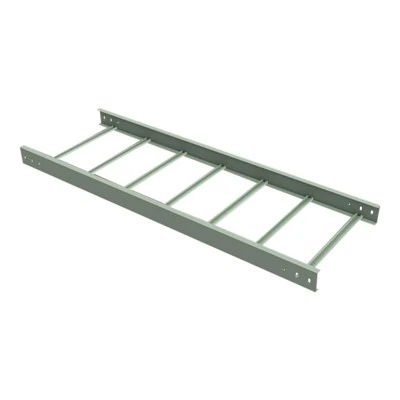
A galvanized cable tray is a metal pathway system used to support, protect, and route electrical cables within a building or facility. Galvanized cable trays are used to support and organize cables in various installations, such as commercial buildings, industrial facilities, and data centers.


Corrosion Resistance
Hot-dip zinc coating plays an exceptional role in cable trays, which provides corrosion resistance to the trays. It is a process that adds a protection shield over the trays, ensuring that they withstand any environmental conditions, including high moisture, chemicals, and highly high-temperature exposure.
Durability
Undertaking the galvanization process means investing in a long-term investment that provides long-lasting solutions for galvanized steel. Further, the maintenance and replacement of the trays are reduced to a great extent because of the galvanization process of the steel material, which provides extensive durability.
Strength
Galvanized trays are engineered with the help of solid steel, which adds strength to the product, helping them support heavy cable loads and stand up high with mechanical stress. Hence, the strength of the overall steel increases due to proper galvanization of cable trays.
Environmental Friendliness
Considering the environmental aspect, galvanization is a boom to the industry. The only reason for it is because the complete process is eco-friendly, which has less impact on the environment, less consumption of energy, and negligible waste. Also, the best part of the process is that it is the material that can be recycled and aligned with perfect sustainable goals.
Easy Installation
Galvanized cable trays are easy to install with less human resources and less time. The overall process gets simplified for significant industries managing cables in industrial settings or commercial buildings. The comprehensive solutions provided are easy to adopt and worth considering.
Versatility
The galvanized cable trays are used and suitable for various applications. It means it is used in power distribution, data centres, manufacturing, industrial, and so on. Hence, these trays are versatile and have significant usage.
The Importance of Galvanizing Cable Trays
Increasing Longevity
The cable tray's endurance is significantly increased by hot-dip galvanization, which is critical for making the trays even more practical. The galvanized trays do not need to be replaced as regularly, which is a significant benefit.
Provides More Security
The trays are hot-dip galvanized to protect them from a range of chemicals and other factors. As a result, the building's wiring is kept in good condition, preventing damage. The trays' corrosion resistance after galvanization ensures that they can efficiently withstand adverse weather conditions. Consequently, the galvanized trays considerably extend the life of the electrical lines.
Increasing the Safety Quotient
The safety quotient of a cable tray is greatly enhanced when it is hot-dip galvanized. The galvanized cable tray protects the electrical wires and thus serves a critical function in preventing mishaps or damage.
Fantastic Adaptability
Hot-dip galvanized cable trays are designed to fit into nearly any type of residential or industrial structure. This is due to their universal design, which ensures that the trays can be adapted to almost any environment.
Reduces the Need for Maintenance
When a cable tray is hot-dip galvanized, it requires almost no maintenance, making it ideal for the electrical wiring that the trays support.
Affordability
The use of galvanized trays saves users a significant amount of money. The galvanized tray protects electrical wires from damage, which would have resulted in considerable expenses if they had to be replaced. Furthermore, the cable tray is extremely sturdy, corrosion-resistant, and low-maintenance, allowing for substantial savings.
Cold Galvanized Cable Tray (Electro-Galvanized)
This process uses electrolysis to remove oil and pickle the cable tray. The tray is then placed into a salt solution, and the negative electrode of the electrolysis equipment is attached to it. A zinc plate is positioned on the opposite side of the cable tray and connected to the electrolysis. The positive terminal of the device is linked to the power supply, and the directional flow of the current from the positive terminal to the negative will transfer a layer of zinc onto the cable tray. The cold-plated cable tray is refined first and then galvanized.
Hot-Dipped Galvanized Cable Tray
The process includes pickling, water washing, adding a supporting layering solution, drying, rack plating, cooling, cleaning, polishing, and finally hot-dip galvanizing. This is an effective steel anti-corrosion method primarily used in steel structures across various industries. It involves submerging derusted steel components in a molten zinc solution at around 500°C, allowing the surface of the steel parts to bond with the zinc layer, thereby achieving anti-corrosion.
Warm Spray Zinc-Coated Cable Tray
The surface is composed of evenly distributed zinc particles, and its roughness provides excellent adhesion for spray paint, ensuring that the paint surface is resistant to chipping. Additionally, it prevents an uneven paint surface that could affect appearance. Hot-sprayed zinc does not cause deformation of the workpiece, as the heat generated only affects the working surface.
Plastic-Sprayed Cable Tray
This surface treatment method involves spraying plastic powder onto the cable tray. There is no need for thinner, resulting in no contamination to the environment or harm to health. The finish has excellent aesthetic quality, strong adhesion, and mechanical strength. The curing time for the spraying process is short, and the corrosion resistance of the coating is significantly enhanced. No primer is required, making construction straightforward, while reducing the technical requirements for workers. This method is generally more cost-effective than traditional painting processes. Some construction guidelines specify that the electrostatic spraying process must be used, as it avoids the common dripping issues found in painting.

Galvanized cable trays find extensive use in:
Industrial facilities where there’s a high likelihood of exposure to corrosive substances or harsh weather conditions.
Commercial buildings requiring reliable and durable cable management solutions.
Outdoor installations such as telecommunications towers, utility poles, and solar farms.
Data centers and IT facilities where uninterrupted power supply and cooling systems rely on well-maintained cabling.
Public infrastructure projects like airports, train stations, and bridges that necessitate robust, low-maintenance cable management systems.
Let us now continue and understand the common issues that arise during the galvanization process of cable trays. These issues include:
● The short length of the cable can lead to short circuits, which may affect power distribution.
● Cable tray formation can be damaged due to the operation of current relays.
● Since the cables are internally connected, there is a risk of short circuits occurring.
● There is a possibility that the cables may get damaged due to electrical faults, which can result in either complete or partial failure.
● If the quality of the cable is poor, it can also be a root cause of damage.

Cable capacity: The first aspect to consider is the cable capacity of the tray. Cable trays come in a variety of sizes and designs, each offering different cable-holding capabilities. Evaluate the number and type of cables that will be installed in the tray and choose a size that allows for future expansion. It is critical to ensure that the selected cable tray can accommodate all cables without excessive bending or overloading.
Material: Cable trays are available in a variety of materials, including steel, aluminum, and fiberglass. Each material has its own advantages and disadvantages. Steel cable trays are strong and resilient, making them ideal for heavy-duty applications. Aluminum cable trays are lightweight and corrosion-resistant, making them suitable for outdoor installations. Fiberglass cable trays, on the other hand, are non-conductive and will not corrode, making them ideal for industrial environments. Consider the environment and conditions in which the cable tray will be installed before choosing the material that best suits your needs.
Installation environment: The installation environment should be considered when choosing the tray. For indoor installations, regular cable trays may suffice. However, in harsh outdoor or industrial environments, special coatings or materials may be required to protect the tray from corrosion and other elements. If the cable tray will be exposed to chemicals, extreme temperatures, or moisture, make sure to choose a tray that is specifically designed to withstand these conditions.
Design of cable tray: There are many designs of cable trays, including ladder type, trough type, solid bottom type, and wire mesh type. The choice of design depends on factors such as cable support requirements, ventilation needs, and aesthetic preferences. Ladder cable trays provide excellent cable visibility and ease of maintenance, while trough cable trays offer additional protection from dust and debris. Solid bottom cable trays are suitable for applications where cable safety is a concern, while wire mesh trays provide enhanced airflow for heat-generating cables.
Compliance with standards: Ensure that the selected cable tray complies with relevant industry standards and codes. Compliance ensures that cable trays have undergone the necessary testing and meet performance and safety requirements. Look for certifications from recognized organizations to ensure that the cable trays are of high quality and reliability.
Our Factory
Suzhou SCHHOW Electrical Technology Co., Ltd. was established in 2018 and is located in Suzhou, Jiangsu Province, known as the "Jiangnan Water Town". It is a professional manufacturer of electrical equipment products such as cable trays and seismic brackets. It is also a comprehensive electrical technology solution service provider that integrates research and development, production, sales, installation and after-sales support services.


FAQ
As one of the leading galvanized cable tray manufacturers and suppliers in China, we warmly welcome you to wholesale galvanized cable tray in stock here and get free sample from our factory. All customized products are with high quality and competitive price.
galvanized cable tray, Galvanized Trough Type Cable Tray, Galvanized Ladder Type Cable Tray