


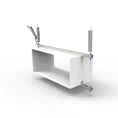
Stainless Steel Cable Tray
Why choose us
Our Factory
Our factory spans 3,800 square meters and employs 15 workers. We achieve an annual output value of about 10 million yuan.
Our Product
We specialize in several product lines, including cable trays, seismic supports, finished supports, and photovoltaic supports.
Production Equipment
To produce our products, we use a range of equipment. This includes one automatic one-time molding production line, one automatic electrostatic powder spraying line, two shearing machines, two bending machines, five punching machines, and two welding machines.
Product Application
Our products are widely used in various applications. They can be found in schools, residential buildings, hospitals, office buildings, parking lots, industrial plants, comprehensive shopping malls, and nuclear power plants. They are commonly used for laying lines in mechanical and electrical equipment, fire engineering, and weak current engineering.
A sort of cable management system manufactured from premium stainless steel is stainless steel cable trays. Unlike other substances like plastic or aluminum, stainless steel is very resistant to rust, corrosion, and other types of harm. In severe locations like chemical factories, oil refineries, and offshore platforms, stainless steel cable trays are therefore perfect for use.


Benefits of Stainless Steel Cable Tray
Durability
Stainless steel cable trays are strong and can withstand harsh environments, making them ideal for industrial and outdoor applications.
01
Easy to install
Stainless steel cable trays are easy to install and can be customized to fit specific installation requirements.
02
Cost-effective
Stainless steel cable trays are cost-effective compared to other cable management systems, such as conduit.
03
Low maintenance
Stainless steel cable trays require minimal maintenance, which reduces overall maintenance costs.
04
Safety
Stainless steel cable trays provide a safe and secure way to support and protect cables, reducing the risk of electrical accidents.
05
Trough Cable Tray
A trough cable tray is a device used to manage and organize cables in the underground or ductwork of buildings. It helps in preventing water, mold, and other debris from getting into the crucial electric wires that run through the walls of buildings. The product has gained popularity owing to its ability to provide protection against fire hazards created by electrical wires.
Channel Cable Tray
The channel cable tray is a device used to manage the wires in an organized manner within the wall cavity. It provides a safe and secure method of managing cables while installing new Electrical Fittings or during alterations to walls. The product consists of channels cut out at regular intervals along the length of the bar, which allows easy access to electric wires for installation or alteration purposes.
Wire Mesh Cable Tray
A wire mesh cable tray is a type of cable tray that uses wire mesh to support and contain electrical cables. Wire mesh cable trays are used in a variety of applications, including power generation, transmission, and distribution, construction, manufacturing, IT, and telecommunication. Wire mesh cable trays are made from a variety of materials, including steel, aluminum, and stainless steel. They are available in a variety of sizes and configurations to meet the needs of specific applications.
Single Rail Cable Tray
Single Rail Cable Trays are designed for a single row of cable support and are generally used in areas where space is limited. Single Rail Cable Trays provide an economic solution for light to medium duty applications. They can be wall mounted or suspended from the ceiling and are available in a variety of widths, heights, and lengths to suit applications.

When selecting a Stainless Steel Cable Tray, it is essential to consider the various sizes and configurations available to ensure the tray meets the demands of your project. Stainless Steel Cable Tray systems typically come in standard dimensions to accommodate a range of cable management needs. Common sizes include widths of 100 mm, 200 mm, and 300 mm, with depths ranging from 50 mm to 150 mm. Lengths are often available in standard increments such as 1 meter, 2 meters, and 3 meters.
For projects with specific requirements, CBRO Fiberglass manufacturer offers Stainless Steel Cable Tray customization options. Custom sizes and configurations can be tailored to fit unique installations, allowing for precise alignment with existing infrastructure or bespoke project needs. This flexibility ensures that the Stainless Steel Cable Tray provides optimal support and coverage, maintaining the integrity and efficiency of your cable management system.
Installation at the Top of the Cabinet: Stainless steel cable trays are often installed at the top of cabinets. Due to the specific structure of the ceiling and the height of the floor, this location is usually preferred. This method effectively sets up the tray while avoiding damage to the ceiling. When installing at the top of the cabinet, it can be bolted and fixed without needing to open the cabinet.
Ceiling Installation: When installing a stainless steel cable tray on the ceiling, a ceiling installation method can also be used. However, in this case, it is recommended that the specific span be calculated according to the actual load.
Ground Support Installation: When installing the stainless steel cable tray, ground support is typically used. This method not only installs the cable tray but can also accommodate outdoor base stations. It’s important to follow proper installation procedures to achieve good results. If the installation method is incorrect, it may affect the overall performance of the tray and lead to unnecessary failures, so please pay close attention to the installation process.

Stainless steel cable trays are commonly used in electric power, communications, petrochemical, and other fields. To ensure the quality of stainless steel cable trays, it is necessary to focus on the following aspects:
Raw Material Selection: The main raw materials for stainless steel cable trays include stainless steel plates, connectors, and fasteners. When selecting raw materials, ensure they meet the requirements of relevant national standards and industry specifications, and possess good corrosion resistance, mechanical properties, and welding characteristics. Additionally, strict quality inspections of raw materials should be conducted to ensure their compliance.
Design and Manufacturing: The design of the stainless steel cable tray should be based on the actual needs of the project, ensuring a reasonable structure, easy installation, and safe use. During the manufacturing process, production should strictly adhere to the design drawings and technical requirements to ensure dimensional accuracy and product quality. Rigorous quality control should be implemented during production to maintain stable product performance.
Surface Treatment: Surface treatment is crucial for ensuring the corrosion resistance of stainless steel cable trays. Common methods include galvanizing, plastic spraying, or hot-dip galvanizing. During surface treatment, ensure that the coating is uniform, adheres well, and is free from bubbles, rust, and other defects. Thickness testing and salt spray testing should also be conducted to verify that the coating meets relevant standards.
Installation and Construction: The installation and construction of stainless steel cable trays are essential for ensuring their performance. During installation, relevant specifications and operational requirements should be followed to ensure the level and verticality of the cable tray, secure connections, and reliable grounding. Quality inspections should also be performed during installation to ensure compliance with quality standards.
Quality Inspection: Quality inspection is the final step to ensure product quality. Before leaving the factory, products should undergo comprehensive quality checks, including appearance inspections, dimensional measurements, and performance testing. For any non-compliant products, timely rectification or rework should be performed to ensure that all factory products meet quality standards.
After-Sales Service: Manufacturers of stainless steel cable trays should provide comprehensive after-sales service, addressing customer issues in a timely manner. Good after-sales service enhances customer trust in manufacturers and contributes to improved product quality.
Precautions for Using Stainless Steel Cable Trays
Proper Installation
Before installation, carefully plan the cable tray route to ensure it meets the project requirements.
Ensure that the cable tray is securely fastened to the supporting structure to prevent any movement or sagging.
Follow the manufacturer's guidelines for installation, including proper spacing, support intervals, and load capacity.
Cable Tray Selection
Consider the specific environment and conditions in which the cable tray will be used. Stainless steel cable trays are suitable for corrosive or high-moisture environments.
Choose the appropriate size and type of cable tray based on the number and size of cables to be supported.
Ensure that the cable tray meets the necessary industry standards and regulations.
Cable Management
Avoid overloading the cable tray beyond its recommended load capacity. Excessive weight can cause deformation or failure.
Properly organize and route cables within the tray to prevent excessive bending, twisting, or tangling.
Use cable ties or clamps to secure cables at regular intervals to maintain a neat and organized cable management system.
Regular Maintenance
Inspect the cable tray regularly for any signs of damage, such as corrosion, loose connections, or bent sections.
Clean the cable tray periodically to remove dust, debris, or any other contaminants that may affect its performance.
Repair or replace any damaged or worn-out components promptly to prevent further deterioration.
Safety Considerations
Ensure that the cable tray is installed in a safe location, away from potential hazards or areas with high foot traffic.
Follow electrical safety guidelines when working with live cables, and ensure proper grounding and insulation.
Provide adequate warning signs or barriers to prevent accidental contact with the cable tray.
Material Selection and Quality Control
First, high-quality stainless steel materials that meet national standards, such as 304 and 316, are selected. These materials exhibit good corrosion resistance, high-temperature resistance, and high strength. In the procurement of raw materials, a strict supplier screening mechanism is established to inspect each batch, including material composition analysis and mechanical properties testing, to ensure the stable and reliable quality of the materials. Additionally, the thickness and flatness of the stainless steel plates are strictly controlled to prevent deformation and breakage during use due to material defects.
Design and Structural Rationality
During the design stage, relevant electrical specifications and safety standards are followed to ensure the structural design of the tray is reasonable. For example, the load-bearing capacity is determined to ensure it can withstand the expected cable weight and external loads. The tray's width and height are designed to allow cables to be laid neatly and orderly, avoiding squeezing and entanglement. Furthermore, the installation method and fixing structure are considered to ensure the tray is firmly attached to the building after installation, preventing loosening or falling due to vibration, wind, or other factors
Production Process and Quality Control
Advanced processing technologies, such as precision cutting, bending, and welding, are utilized during production to ensure dimensional accuracy and connection strength. Strict quality inspections are conducted on welding parts, including appearance inspections and non-destructive testing, to ensure the welds are firm and free of defects such as cracks and pores. Additionally, surface treatments like polishing and wire drawing improve the aesthetics of the tray and enhance its corrosion resistance. A complete quality control system is established throughout the production process, with strict inspections and testing at each production stage to ensure that the products meet safety standards.
Installation Guidance and After-Sales Service:
Customers are provided with detailed installation guidance, including installation methods and precautions, to ensure proper installation. If necessary, professional technicians can be dispatched for on-site guidance to promptly address any issues encountered during installation. A comprehensive after-sales service system is established to respond to and resolve problems faced by customers during use in a timely manner. Regular product visits and inspections are conducted to ensure that the safety performance of the cable trays remains in optimal condition.
Our Factory
Suzhou SCHHOW Electrical Technology Co., Ltd. was established in 2018 and is located in Suzhou, Jiangsu Province, known as the "Jiangnan Water Town". It is a professional manufacturer of electrical equipment products such as cable trays and seismic brackets. It is also a comprehensive electrical technology solution service provider that integrates research and development, production, sales, installation and after-sales support services.


FAQ
As one of the leading stainless steel cable tray manufacturers and suppliers in China, we warmly welcome you to wholesale stainless steel cable tray in stock here and get free sample from our factory. All customized products are with high quality and competitive price.
Stainless Steel Ladder Type Cable Tray, Stainless Steel Trough Type Cable Tray, stainless steel cable tray