


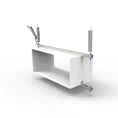
Seismic Restraint System
Why choose us
Our Factory
Headquartered in Suzhou, SHIHOW Products operates in China, Hong Kong and Macau, providing customers with innovative solutions and services on large-scale construction projects. We are firmly committed to becoming the preferred metal cable containment and cabling system supplier.
Our Product
We specialize in several product lines, including cable trays, seismic supports, finished supports, and photovoltaic supports.
Production Equipment
To produce our products, we use a range of equipment. This includes one automatic one-time molding production line, one automatic electrostatic powder spraying line, two shearing machines, two bending machines, five punching machines, and two welding machines.
Product Application
Our products are widely used in various applications. They can be found in schools, residential buildings, hospitals, office buildings, parking lots, industrial plants, comprehensive shopping malls, and nuclear power plants. They are commonly used for laying lines in mechanical and electrical equipment, fire engineering, and weak current engineering.
Seismic Support Series is a system of structural supports and components designed to resist the lateral forces that occur during an earthquake. These lateral forces, also known as seismic forces, can cause a building to sway, twist, or even collapse. Seismic bracing helps to maintain the stability of a building during an earthquake and protect its occupants and contents.


Quick, Easy Install
The entire range of seismic products are designed to reduce steps needed for installation. Features like bolt head standardization remove any tool changes during installation, and snap-off bolt heads provide a simple-to-mount and easy-to-inspect connection. Sway brace clamps for both pipe and strut trapeze come out of the box ready to install without the need to remove hardware first or purchase supplementary components.
Retrofit Installation
The retrofit ability allows for braces and spacers to be installed after the pipe or trapeze assembly is installed, without disassembling existing services. The trapeze brace component can be used with several brace member types, rigid pipe, conduit and strut, and the adjustable design can be used with different brace pipe sizes.
Easy Inspection
Installations can be easily inspected with the use of shear-off heads, which show the bolts have been installed properly. Rigid Bracing System is cULus® Listed,

There are two kinds of seismic braces: rigid braces and cable (tension-only) braces. Both rigid and cable braces counter swaying motion by securely attaching pipes to the structural members of the building.
Rigid Seismic Bracing
Rigid bracing is a stiff and unbending piece of equipment. These braces are almost always made of steel. The main advantage of this stiff bracing is that it resists motion in two directions (through compression and tension). The significant disadvantage of rigid bracing is related to its advantage: a rigid length of steel must be cut to the proper length to run from the structural anchor point to its attachment at the pipes.
For easier installation, rigid brace systems often use hinged attachments. These attachments bolt into both the structure and the non-structural equipment. Pivot points where the attachments connect to the brace member allow them to be easily positioned at the correct angle. Note that all bolts and screws used to mount rigid braces must be listed and approved for their intended purpose and seismic load.
Seismic Cable Bracing
Seismic cable bracing is made of steel cable that is listed for use as seismic bracing. Since it is somewhat flexible, it resists motion in only one direction, which is why it is sometimes referred to as “tension bracing.” This means that to perform the same function as a stiff brace, two seismic cable braces are needed. However, cable bracing has a significant advantage over rigid bracing: it is essentially unlimited in length and can be easily cut to fit any space.
Why is Seismic Bracing Essential for Earthquake Protection?
Seismic bracing is essential for earthquake protection because it helps prevent damage to buildings and infrastructure during an earthquake. When a building is not adequately braced, the lateral forces generated during an earthquake can cause significant damage, including:
Structural damage
Lateral forces can lead to cracks in walls, floor collapses, and roof failures, resulting in severe structural damage.
Non-structural damage
These forces can also harm non-structural components, such as windows, doors, and mechanical systems.
Occupant safety
Buildings that are not adequately braced are at risk of collapse during an earthquake, which can result in injury or death to occupants.
Single Pipes and Conduit Braces
Single pipe and conduit rigid and cable braces protect fire sprinkler systems, gas piping systems, electrical conduits and plumbing systems. The rigid bracing solutions braces pipes 1” through 12” and the cable brace is unlimited. These seismic bracing solutions include easy-to-install and easy-to-inspect snap-off bolts, with only one wrench needed for installation.
Trapeze and Threaded Rod Braces
Trapeze and threaded rod braces are used to brace trapezes, distributed systems and suspended equipment. These products brace rods 3/8” through 3/4”, and have retrofit ability which allows for the brace to be installed after the trapeze assembly is installed. One size wrench is needed for installation of the rigid bracing products, and the shear-off head ensures correct torque, simplifying inspection.
Threaded Rod Stiffeners
Threaded rod stiffeners are used to protect threaded rods from buckling in compression, and can brace rods 3/8” through 7/8”. The nVent CADDY Quick Clip Rod Stiffener enables one hand, snap-in installation, with no tools or bolt tightening required.
Seismic Bracing Design for Seismic Protection
An earthquake is a natural disaster. While it cannot be prevented, preparation is possible. In many cases, a building's structure is protected through proper design.
However, the non-structural components of a building are just as important as its structural elements. These include MEP (mechanical, electrical, plumbing) systems and HVAC (heating, ventilation, air-conditioning) systems.
This field is greatest expertise. With decades of experience, we are ready to assist you with your design needs according to local building codes. For example, NFPA 13 requires seismic protection for fire sprinkler systems, while ASCE 7 seismic design requirements cover mechanical and electrical components.
Seismic bracing design for these components primarily focuses on two main aspects:
First, it limits lateral and longitudinal movement of components to predefined limits.
Second, it safely transfers seismic forces to the main structure of the building.
Seismic Cable Bracing for Non-Structural Components
The fundamental nature of earthquakes causes large movements that affect buildings. Based on the characteristics of the seismic event, each structure has its own unique response; for instance, the roof of a skyscraper may experience movements reaching a couple of meters in each direction.
Any component subject to movement requires proper attachment to the structure. Seismic cables provide an effective means to achieve this goal, as they allow for isolation of components subject to vibration, unlike rigid braces.
The length of steel rigid braces is also a concern because they are subject to compression, which can cause buckling. Therefore, rigid braces have specific requirements for calculations, resulting in additional time and cost for design and installation.
Rod stiffeners, used in conjunction with braces, prevent buckling of long threaded rods.
Restraint System Seismic Load Calculations
Earthquakes generate forces that result in high G levels. Non-structural components must, at a minimum, withstand these loads without failure. These forces can act in any direction, both laterally and longitudinally. Therefore, selecting the correct restraint type and anchors involves considering the worst-case scenario.
Lateral forces act perpendicular to the run, while longitudinal forces act parallel to the run. This means that seismic motion in both directions must be accounted for. A four-way bracing system addresses both directions at the same point.
The force at the center of gravity results in tension and shear loads at anchor points. These outputs determine the appropriate products that will safely transfer the forces to the building structure.
Designing effective bracing systems for rooftops that comply with seismic bracing requirements involves careful review of several aspects, including structural analysis, material selection, and code compliance, to name a few.
Structural Analysis – This step consists of gathering both seismic load calculations and dynamic analysis information. Seismic load calculations measure factors such as location, soil type, building height, and mass distribution. Dynamic analysis determines how the structure will respond to seismic forces or extreme stress from inclement weather and high winds. The information provided by these two methods helps guide the design of the bracing system.
Material Selection – When deciding on material selection, it is important to acknowledge that seismic bracing should have high ductility, allowing parts to absorb and dissipate energy without fracturing. Another essential aspect to consider is the strength of the material. Materials must be strong enough to resist seismic forces or high winds without yielding or breaking. The choice of materials should also consider the building’s overall weight and its impact on seismic performance. Steel is a popular choice due to its excellent ductility and strength ratings. Our direct mount bases are made entirely from steel, ensuring maximum performance.
Redundancy and Resilience – Incorporating redundancy into your seismic bracing system ensures that if one part of the system fails, other parts can still carry the load. This increases the overall resilience of the structure. The bracing system should also be designed to prevent progressive collapse, where the failure of one element leads to the failure of others, causing a chain reaction.
Code Compliance & Testing – The seismic brace system’s design must comply with local and international building codes and standards, such as the International Building Code (IBC) and the American Society of Civil Engineers (ASCE) standards, which provide guidelines for seismic design. Before implementation, the design should be validated using computer simulations and modeling to predict its performance during an earthquake. Where feasible, physical testing of components or scale models may be conducted to verify the effectiveness of the bracing system under simulated seismic conditions.
Site-Specific Considerations – When examining location, rooftop surface material and seismic hazard probability must be considered. Common rooftop surface materials include rubber membrane, steel, and concrete, each requiring a different method for affixing seismic bracing. When determining the seismic hazard assessment, the design must account for the specific seismic risks of the location, including the likelihood and potential magnitude of earthquakes.

Custom MEP (Mechanical, Electrical, Plumbing) Support Engineering
We provide custom analyses and evaluate individual systems within the overall context of the entire commercial building project. This allows architects, other engineers, contractors, subcontractors, and building owners to devise systems that best integrate with the building’s architecture and desired performance.
Engineered Design Layouts
● First, we take a multi-hazard approach to commercial building designs that account for the potential impact of seismic forces as well as any major hazards to which the area is vulnerable.
● Second, we evaluate performance-based requirements that may exceed the minimum life safety standards of current seismic codes, establishing the appropriate needs for the building regarding seismic MEP.
● Third, and as important as the others, because earthquake forces are dynamic and each building responds according to its own design complexity, we collaborate with all the building design engineers and subcontractors to utilize the best methods and seismic products available.
Seismic Calculations
Earthquake-resistant design requires calculations of earthquake forces on buildings and structures. FSS works to identify the appropriate calculations for the building's location.
Review of Full Design Package for City Permit
FSS reviews an entire checklist, from site photos to drawings to calculations, to complete the full submittal package needed.
Frame Design and Fabrication
We assist MEP contractors with any issues regarding the frame design of the structure and any fabricated assemblies.
Shaft Support Engineering
Force Support Services helps solve issues and perform calculations for:
● Shear stresses due to the transmission of torque (from torsional loads)
● Bending stresses (tensile or compressive, due to forces acting upon machine elements like gears and pulleys, as well as the self-weight of the shaft)
● Stresses due to combined torsional and bending loads
Vibration Isolation Design
We contribute to designing the most efficient ways to isolate undesirable movement and prevent the transfer of vibrations throughout commercial buildings for MEP equipment.
Rooftop Support Engineering
FSS reviews roof access walkways, cable tray supports, and pipe supports to add value engineering to every building we work on in conjunction with our MEP contractors. These additions help maintenance workers traverse the roof safely and quickly while minimizing the impact on the roof infrastructure.
Piping Thermal Expansion Engineering
FSS understands that as pipe temperature changes from installation conditions to operating conditions, it expands or contracts, potentially generating enormous forces and stress on the system. We work to design the best possible solutions for managing pipe expansion, ensuring it can be absorbed without creating undue force or stress. Providing proper flexibility is a major task in designing piping systems.
Equipment Anchorage Design and Calculations
We focus on critical areas related to equipment anchorage design and calculations, including:
● Distribution of non-structural design forces over the height of the building
● Response modification coefficients for non-structural components
● Over-strength factors used in the design of non-structural anchorage
● Non-structural component and system performance metrics
Jobsite Visits for Inspection Support and Installation Training
Workplace inspections help prevent delays in completing jobs and meeting deadlines. We listen to the concerns of workers and supervisors, gaining a better understanding of the job and recommending corrective changes and procedures. By being on-site when issues arise, we can address problems and keep the project on track.
Computer-Aided Design (CAD) Support
CAD is software used to create 2D and 3D models and designs. FSS assists in supplying, deciphering, correcting, or changing building plans, floor plans, electrical schematics, mechanical drawings, technical drawings, etc., to help move a job forward and stay on schedule.
3D Modeling for Seismic Bracing
3D modeling is used in computer graphics to represent commercial buildings and/or surfaces in our industry. We assist in creating and/or correcting 3D models of buildings involved in seismic MEP projects.
Our Factory
Suzhou SCHHOW Electrical Technology Co., Ltd. was established in 2018 and is located in Suzhou, Jiangsu Province, known as the "Jiangnan Water Town". It is a professional manufacturer of electrical equipment products such as cable trays and seismic brackets. It is also a comprehensive electrical technology solution service provider that integrates research and development, production, sales, installation and after-sales support services.


FAQ
As one of the leading seismic support series products manufacturers and suppliers in China, we warmly welcome you to wholesale seismic support series products in stock here and get free sample from our factory. All customized products are with high quality and competitive price.