


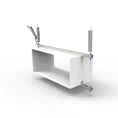

The fundamental fire protection capabilities of aluminum and steel cable trays differ significantly, stemming from the physical properties of their metal materials. Aluminum has a melting point of only approximately 660°C, and plasticity begins to develop above 150°C. Its strength decreases significantly above 300°C, making it prone to rapid melting and collapse in a fire, unable to sustain cable support. Ordinary carbon steel, on the other hand, has a melting point of 1450-1500°C and maintains good rigidity and load-bearing capacity within the 600°C range. This allows it to maintain structural stability for extended periods during the initial stages of a fire, providing support for cables.

The fire protection treatment methods and compatibility of the two also differ. Due to the high thermal conductivity of aluminum cable trays (approximately three times that of steel), fire-retardant coatings struggle to form a durable, uniform insulation layer, and fire-resistant coatings cannot effectively protect against fire. Consequently, aluminum cable trays typically only meet low-level fire protection requirements of ≤30 minutes, resulting in high treatment costs. Steel bridges have more sophisticated fire protection. They can be coated with specialized fire-retardant coatings to achieve a 1-3 hour fire rating, or they can be coated with fire-resistant cladding or constructed with fire-resistant steel. These offer greater adaptability and cost-effectiveness, meeting medium- and high-level fire protection requirements.

Aluminum bridges offer a significant difference in cable protection in high-temperature environments. Aluminum bridges soften and collapse quickly at high temperatures, exposing cables directly to flames, accelerating insulation combustion, increasing the risk of toxic gas release and electrical short circuits. Even if the fire-resistant coating on steel bridges is damaged, they can still support the cables for a period of time (e.g., within an hour), reducing the likelihood of direct exposure to flames, buying time for evacuation and firefighting, and mitigating the risk of secondary disasters.