


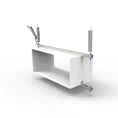
The daily maintenance of the bridge starts with inspection and cleaning. The surface of the bridge needs to be visually inspected every month, focusing on whether the zinc-aluminum-magnesium coating has scratches and rust spots, whether the sealing strip is aging, and whether the bolts are loose. Measure the grounding resistance every quarter to ensure that the grounding system is normal. When cleaning, ordinary dust should be handled with a dry soft cloth or a vacuum cleaner to avoid scratching the coating; stains such as oil should be wiped with a neutral detergent diluted, rinsed with clean water, and then sprayed with zinc-aluminum-magnesium protective agent.
When the bridge coating is damaged, it needs to be repaired according to the situation. Minor scratches can be polished with sandpaper and then painted with repair paint; local rust should be removed, cold spray zinc should be sprayed and covered with anti-corrosion coating; large-area shedding requires hot spray repair or replacement of parts, and cross-connection grounding should be done. Different repair methods are highly targeted and can effectively restore the anti-corrosion performance of the bridge.
In humid or salt spray environments, such as marine and underground engineering scenes, the maintenance of the bridge needs to be strengthened. Clear the drainage holes at the bottom of the ladder frame every six months, check and replenish the interface sealant; sample the components for salt spray simulation test every year. If the rust area exceeds the standard, the anti-corrosion layer needs to be re-sprayed to ensure the durability of the bridge in harsh environments.
In chemical corrosive environments, the pH value of the attached liquid on the surface of the bridge frame is tested every quarter, and it is cleaned and treated in time; protective covers are installed on key parts. In high temperature environments, check the insulation board and sealing strip every six months, measure the coating thickness every year, and spray the high temperature resistant coating if it is insufficient to prevent high temperature from damaging the bridge structure and anti-corrosion layer.
Structural and load-bearing maintenance are related to the safety of the bridge. Overloading is strictly prohibited during use. The actual load must be controlled within 80% of the design load. Deflection tests should be carried out regularly to prevent the bridge frame from sagging and deformation. At the same time, tighten the bolts every quarter, check the connecting plates, and replace and correct the rusted or deformed parts in time to ensure the stability of the bridge structure.
In the face of emergencies, such as heavy rain and fire, timely handling is required. Clean up the accumulated water and spray rust inhibitor after heavy rain, and fully test the strength after the fire. In addition, formulate an annual maintenance plan according to the environmental level, from routine cleaning to full surface anti-corrosion spraying, different levels of maintenance meet the maintenance needs of the bridge in various scenarios and extend the service life.


