


Avoid excessive stress and impact
Fiberglass cable trays are less impact-resistant than steel cable trays. Avoid hitting them with hard objects such as hammers during installation. Avoid collisions during transportation that could cause cracking. When securing, tighten bolts moderately (it's recommended to use a torque wrench and follow the manufacturer's specified torque, typically ≤30 N·m). Overtightening may cause cracks in the cable tray itself or at its connections.
01
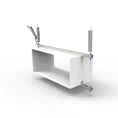
Strictly control bracket spacing
Due to the limited rigidity of fiberglass cable trays, bracket spacing should be smaller than for metal cable trays:
For horizontal installation, bracket spacing is recommended to be ≤1.5m (typically ≤2m for steel cable trays).
For vertical installation, bracket spacing should be ≤1m. Anti-fall supports should be installed at the bottom of the cable tray to prevent deformation caused by prolonged load bearing.
02
Connection Methods and Sealing
Fiberglass cable trays should be connected using specialized fiberglass bolts or stainless steel bolts (avoid carbon steel bolts to prevent contact corrosion). Rubber gaskets should be placed at the joints to prevent loosening and damage from direct friction between the metal bolts and the cable tray. If used outdoors or in humid environments, apply a special sealant (such as silicone sealant) to the joints to enhance waterproofing.
03
Specificities of Grounding Treatment
Fiberglass bridges are inherently insulated (non-conductive). If cables require grounding protection, a separate grounding trunk (such as a copper busbar) must be installed inside the bridge and connected to the building grounding system. The grounding resistance must be ≤ 4Ω. Grounding current must not be conducted through the bridge itself to prevent grounding failure due to insulation properties.
04