


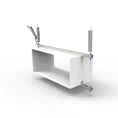


As a seasoned supplier of galvanized cable trays, I've witnessed firsthand the evolution of this industry. Galvanized cable trays are essential components in electrical and telecommunications systems, providing a reliable and durable solution for cable management. In this blog post, I'll delve into the future development trends of galvanized cable trays, exploring technological advancements, market demands, and environmental considerations.
Technological Advancements
One of the most significant trends in the galvanized cable tray industry is the integration of advanced manufacturing technologies. Computer Numerical Control (CNC) machining has revolutionized the production process, allowing for greater precision and efficiency. With CNC machines, we can create complex shapes and designs with minimal waste, ensuring that each cable tray meets the highest quality standards.
Another area of technological advancement is the development of new coating technologies. Traditional hot-dip galvanizing provides excellent corrosion resistance, but new coatings are being developed to enhance this further. For example, some manufacturers are applying additional polymer coatings on top of the galvanized layer to provide extra protection against harsh environments, such as chemical exposure or extreme weather conditions.
In addition, the rise of the Internet of Things (IoT) is having a profound impact on the cable tray industry. Smart cable trays are being developed that can monitor the condition of cables, detect faults, and even predict maintenance needs. These smart trays are equipped with sensors that collect data on temperature, humidity, and vibration, which can be transmitted to a central monitoring system. This allows for proactive maintenance, reducing downtime and improving the overall reliability of the electrical system.
Market Demands
The demand for galvanized cable trays is driven by several factors, including the growth of the construction industry, the increasing adoption of renewable energy sources, and the need for efficient cable management in data centers.
In the construction industry, galvanized cable trays are widely used in commercial, industrial, and residential buildings. As urbanization continues to increase, the demand for new construction projects is expected to grow, driving the demand for galvanized cable trays. Moreover, the trend towards sustainable building practices is also influencing the market. Galvanized cable trays are recyclable and have a long lifespan, making them an environmentally friendly choice for construction projects.
The renewable energy sector is another major driver of the galvanized cable tray market. With the increasing focus on reducing carbon emissions, there has been a significant investment in solar, wind, and hydroelectric power projects. Galvanized cable trays are used to support and protect the cables in these renewable energy systems, ensuring the efficient transmission of electricity. As the renewable energy industry continues to grow, the demand for galvanized cable trays is expected to increase accordingly.
Data centers are also a key market for galvanized cable trays. With the exponential growth of data, there is a need for efficient cable management solutions to ensure the reliable operation of servers and networking equipment. Galvanized cable trays provide a cost-effective and reliable way to organize and protect the vast amount of cables in data centers. As the demand for cloud computing and big data analytics continues to rise, the data center market is expected to expand, driving the demand for galvanized cable trays.
Environmental Considerations
In recent years, there has been a growing awareness of the environmental impact of industrial products. As a supplier of galvanized cable trays, we are committed to sustainability and environmental responsibility.
One of the key environmental benefits of galvanized cable trays is their recyclability. Galvanized steel can be recycled at the end of its life cycle, reducing the need for new raw materials and minimizing waste. In addition, the hot-dip galvanizing process itself is relatively environmentally friendly, as it uses a natural element (zinc) to provide corrosion protection.
However, there are also some environmental challenges associated with the galvanized cable tray industry. For example, the production of zinc requires a significant amount of energy, and there are concerns about the environmental impact of zinc mining. To address these issues, some manufacturers are exploring alternative materials and production processes that are more sustainable.
Product Innovation
To meet the evolving market demands and environmental considerations, there is a growing trend towards product innovation in the galvanized cable tray industry.
One area of innovation is the development of modular cable trays. Modular cable trays are designed to be easily assembled and disassembled, allowing for flexibility in installation and future expansion. This is particularly useful in applications where the cable layout may change over time, such as in data centers or industrial facilities.
Another innovation is the use of lightweight materials in cable tray construction. Lightweight cable trays are easier to handle and install, reducing labor costs and improving efficiency. They are also suitable for applications where weight is a concern, such as in high-rise buildings or offshore platforms.
In addition, there is a trend towards the development of aesthetically pleasing cable trays. In commercial and residential buildings, cable trays are often visible, so there is a demand for products that not only function well but also look good. Some manufacturers are offering cable trays in a variety of colors and finishes to match the interior design of the building.
Our Product Offerings
As a leading supplier of galvanized cable trays, we offer a wide range of products to meet the diverse needs of our customers. Our product portfolio includes Galvanized Ladder Type Cable Tray, Galvanized Tray Type Bridge, and Galvanized Trough Type Cable Tray.


Our galvanized ladder type cable trays are ideal for supporting heavy cables and are commonly used in industrial applications. They provide excellent ventilation for cables, reducing the risk of overheating. Our galvanized tray type bridges are suitable for applications where a flat surface is required for cable support, such as in data centers or office buildings. They offer a high degree of cable protection and are easy to install. Our galvanized trough type cable trays are designed to enclose cables completely, providing maximum protection against dust, dirt, and moisture. They are often used in harsh environments or where cable security is a concern.
Conclusion
In conclusion, the future development trend of galvanized cable trays is characterized by technological advancements, market demands, environmental considerations, and product innovation. As a supplier, we are committed to staying at the forefront of these trends, continuously improving our products and services to meet the evolving needs of our customers.
If you are interested in learning more about our galvanized cable trays or have any questions regarding your cable management needs, please feel free to contact us. We look forward to discussing your requirements and providing you with the best solutions for your projects.
References
- "Cable Tray Market - Global Industry Analysis, Size, Share, Growth, Trends, and Forecast 2021 - 2026." Mordor Intelligence.
- "Galvanized Steel: Properties, Production, and Applications." The Fabricator.
- "The Impact of IoT on the Electrical Industry." Electrical Contractor Magazine.