


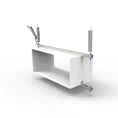


In the industrial landscape, the demand for reliable and durable components is ever - present. One such crucial component is the Medium Pressure Block. As a supplier of Medium Pressure Blocks, I often encounter a common question from potential customers: "Is a Medium Pressure Block corrosion - resistant?" In this blog, I will delve into the factors that determine the corrosion resistance of Medium Pressure Blocks, explore the materials used in their construction, and provide insights into how to ensure their long - term performance in corrosive environments.
Understanding Corrosion and Its Impact
Corrosion is a natural process that occurs when a metal reacts with its environment, typically oxygen and moisture. This reaction leads to the formation of metal oxides, which can weaken the structure of the metal and compromise its functionality. In industrial settings, corrosion can have severe consequences, such as equipment failure, increased maintenance costs, and safety hazards.
For Medium Pressure Blocks, corrosion can be particularly problematic. These blocks are often used in applications where they are exposed to various environmental conditions, including humidity, chemicals, and high - pressure fluids. If a Medium Pressure Block succumbs to corrosion, it may lose its structural integrity, leading to reduced performance and potential system failures.
Materials Used in Medium Pressure Blocks
The corrosion resistance of a Medium Pressure Block largely depends on the materials used in its construction. Here are some of the common materials and their corrosion - resistant properties:
Stainless Steel
Stainless steel is a popular choice for Medium Pressure Blocks due to its excellent corrosion resistance. It contains chromium, which forms a passive oxide layer on the surface of the metal. This layer acts as a barrier, preventing oxygen and moisture from reaching the underlying metal and thus inhibiting corrosion. Different grades of stainless steel offer varying levels of corrosion resistance. For example, 304 stainless steel is suitable for general - purpose applications in mildly corrosive environments, while 316 stainless steel, which contains molybdenum, provides enhanced resistance to pitting and crevice corrosion, making it ideal for more aggressive environments.
Aluminum
Aluminum is another material used in the production of Medium Pressure Blocks. It has a natural oxide layer that forms quickly when exposed to air, providing some level of corrosion protection. However, aluminum is more susceptible to corrosion in alkaline or acidic environments compared to stainless steel. Special coatings or treatments can be applied to aluminum Medium Pressure Blocks to improve their corrosion resistance in harsh conditions.
Plastic
Plastic materials, such as polycarbonate and polyethylene, are also used for Medium Pressure Blocks. These materials are inherently corrosion - resistant as they do not react with oxygen or moisture in the same way as metals. They are lightweight, easy to machine, and can be a cost - effective option for applications where corrosion is a concern. However, plastic blocks may have lower strength and temperature resistance compared to metal blocks.
Factors Affecting Corrosion Resistance
Apart from the material, several other factors can affect the corrosion resistance of Medium Pressure Blocks:
Environmental Conditions
The type and severity of the environment in which the Medium Pressure Block is used play a significant role in its corrosion resistance. For example, blocks used in coastal areas are exposed to saltwater, which is highly corrosive. Similarly, blocks used in chemical processing plants may be exposed to acids, alkalis, and other corrosive chemicals. High humidity levels can also accelerate the corrosion process, especially in the presence of pollutants or contaminants.
Surface Finish
The surface finish of a Medium Pressure Block can impact its corrosion resistance. A smooth surface is less likely to trap moisture and contaminants, reducing the risk of corrosion. Polishing or applying a protective coating can improve the surface finish and enhance the block's ability to resist corrosion.
Mechanical Stress
Mechanical stress can also affect the corrosion resistance of a Medium Pressure Block. Stress can cause micro - cracks in the metal, which provide pathways for oxygen and moisture to penetrate the surface and initiate corrosion. Therefore, it is important to ensure that the block is designed and installed in a way that minimizes stress.


Ensuring Corrosion Resistance in Medium Pressure Blocks
As a supplier, I take several steps to ensure that our Medium Pressure Blocks offer excellent corrosion resistance:
Material Selection
We carefully select the materials based on the specific requirements of the application. For applications in highly corrosive environments, we recommend using high - grade stainless steel or corrosion - resistant plastics. We also conduct thorough material testing to ensure that the selected materials meet the required standards.
Surface Treatment
We offer various surface treatments to enhance the corrosion resistance of our Medium Pressure Blocks. These treatments include passivation, which removes free iron from the surface of stainless steel and strengthens the passive oxide layer, and coating applications, such as powder coating or electroplating, which provide an additional layer of protection.
Quality Control
We have a strict quality control system in place to ensure that every Medium Pressure Block meets our high standards. Our blocks are inspected at every stage of the manufacturing process, from raw material inspection to final product testing. This helps us identify and address any potential issues that could affect the block's corrosion resistance.
Comparing with Edge Pressing Blocks
When considering corrosion resistance, it is also interesting to compare Medium Pressure Blocks with Edge Pressing Blocks. Edge Pressing Blocks are often used in similar applications but may have different design and material requirements. While both types of blocks can be made from corrosion - resistant materials, the design of Edge Pressing Blocks may expose them to different types of stress and environmental conditions. For example, Edge Pressing Blocks may be more likely to experience edge - related corrosion due to their shape. Therefore, it is important to select the appropriate type of block based on the specific application and environmental factors.
Conclusion
In conclusion, a Medium Pressure Block can be corrosion - resistant, but it depends on several factors, including the material, environmental conditions, surface finish, and mechanical stress. As a supplier, we are committed to providing high - quality Medium Pressure Blocks that offer excellent corrosion resistance. Our Medium Pressure Blocks are designed and manufactured using the latest technologies and materials to ensure long - term performance in even the most challenging environments.
If you are in the market for Medium Pressure Blocks and have concerns about corrosion resistance, I encourage you to reach out to us. Our team of experts can help you select the right block for your application and provide you with detailed information about its corrosion - resistant properties. We look forward to discussing your requirements and working with you to find the best solution.
References
- ASM Handbook Volume 13A: Corrosion: Fundamentals, Testing, and Protection.
- Metals Handbook Desk Edition, 3rd Edition.
- Corrosion Engineering by Mars G. Fontana.