


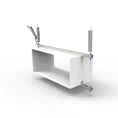


As a supplier of Medium Pressure Blocks, I understand the critical importance of pressure - leakage prevention in these components. Medium Pressure Blocks play a vital role in various industrial applications, from hydraulic systems to manufacturing processes. Ensuring that these blocks are leak - proof is essential for the safety, efficiency, and longevity of the entire system. In this blog, I will delve into the key pressure - leakage prevention measures for Medium Pressure Blocks.
1. Material Selection
The choice of material for a Medium Pressure Block is the first and most fundamental step in preventing pressure leakage. High - quality materials with excellent mechanical properties and corrosion resistance are crucial. For instance, stainless steel is a popular choice for Medium Pressure Blocks. It has high strength, can withstand high pressures, and is resistant to rust and chemical corrosion. This means that even in harsh industrial environments, the block is less likely to develop cracks or holes that could lead to pressure leakage.
Another option is alloy steel, which offers a good balance between strength and cost. Alloy steel can be heat - treated to achieve specific mechanical properties, making it suitable for different pressure requirements. When selecting the material, it is also important to consider the compatibility of the block with the fluid or gas it will be in contact with. Some fluids may react with certain materials, causing degradation over time and increasing the risk of leakage.
2. Precision Manufacturing
Precision manufacturing is the cornerstone of pressure - leakage prevention for Medium Pressure Blocks. Every dimension of the block must be machined to extremely tight tolerances. This includes the internal passages, sealing surfaces, and mounting holes. Any deviation from the specified dimensions can lead to improper sealing, resulting in pressure leakage.
Advanced machining techniques, such as CNC (Computer Numerical Control) machining, are commonly used in the production of Medium Pressure Blocks. CNC machining allows for high - precision cutting and shaping, ensuring that all components are manufactured to the exact specifications. Additionally, quality control measures are implemented throughout the manufacturing process. This includes regular inspections using measuring tools like calipers, micrometers, and coordinate measuring machines (CMMs) to verify the accuracy of the dimensions.
3. Sealing Solutions
Effective sealing is essential for preventing pressure leakage in Medium Pressure Blocks. There are several types of sealing solutions available, each with its own advantages and applications.
O - rings
O - rings are one of the most widely used sealing elements in Medium Pressure Blocks. They are made of elastomeric materials, such as nitrile rubber or fluorocarbon rubber. O - rings work by creating a tight seal between two mating surfaces. When compressed, they deform to fill any gaps or irregularities, preventing the leakage of fluid or gas.
The selection of the appropriate O - ring material is crucial. Different materials have different chemical resistances, temperature ranges, and compression set properties. For example, nitrile rubber O - rings are suitable for applications involving petroleum - based fluids, while fluorocarbon rubber O - rings are more resistant to high - temperature and aggressive chemical environments.
Gaskets
Gaskets are another important sealing solution. They are typically made of materials like graphite, rubber, or metal. Gaskets are placed between two flanges or mating surfaces to create a seal. They can conform to the surface irregularities and provide a reliable barrier against pressure leakage.
Graphite gaskets are known for their excellent heat resistance and chemical compatibility. They can be used in high - temperature applications where other gasket materials may fail. Rubber gaskets, on the other hand, are more flexible and can provide a good seal in applications with lower pressures and less demanding environments.
4. Surface Finish
The surface finish of a Medium Pressure Block is often overlooked but is actually a critical factor in preventing pressure leakage. A smooth and flat surface finish is essential for proper sealing. Rough surfaces can prevent the sealing elements from making a tight contact, leaving gaps through which fluid or gas can leak.
The surface finish is typically measured in terms of roughness average (Ra). For Medium Pressure Blocks, a low Ra value is desired, indicating a smoother surface. Surface finishing processes, such as grinding and polishing, are used to achieve the required surface roughness. These processes not only improve the sealing performance but also enhance the overall appearance and durability of the block.
5. Assembly and Installation
Proper assembly and installation of the Medium Pressure Block are essential for preventing pressure leakage. During assembly, it is important to follow the manufacturer's instructions carefully. This includes using the correct torque values when tightening bolts or fasteners. Over - tightening can damage the sealing elements or the block itself, while under - tightening can result in an inadequate seal.
The alignment of the block is also crucial. Misaligned blocks can cause uneven stress distribution on the sealing surfaces, leading to leakage. Additionally, all components should be clean and free of debris before assembly. Any foreign particles can prevent the sealing elements from functioning properly and increase the risk of leakage.
6. Regular Maintenance and Inspection
Regular maintenance and inspection are key to ensuring the long - term pressure - leakage prevention of Medium Pressure Blocks. Inspections should be carried out at regular intervals to check for signs of wear, damage, or leakage. This includes visual inspections of the block and its sealing elements, as well as pressure tests to detect any potential leaks.
During maintenance, any worn or damaged sealing elements should be replaced immediately. The block should also be cleaned regularly to remove any dirt, debris, or corrosion that could affect its performance. Lubrication of moving parts, if applicable, can also help to reduce wear and prevent leakage.
Edge Pressing Block and Medium Pressure Block
As a supplier, we also offer Edge Pressing Block which can be used in conjunction with Medium Pressure Block in many applications. The Edge Pressing Block provides additional support and sealing in certain setups, enhancing the overall performance and pressure - leakage prevention capabilities of the system.
Conclusion
Pressure - leakage prevention for Medium Pressure Blocks is a multi - faceted process that involves material selection, precision manufacturing, effective sealing solutions, proper surface finish, correct assembly and installation, and regular maintenance and inspection. By implementing these measures, we can ensure that our Medium Pressure Blocks provide reliable and leak - free performance in a wide range of industrial applications.
If you are interested in purchasing Medium Pressure Blocks or have any questions about our products, please feel free to contact us for a procurement discussion. We are committed to providing high - quality products and excellent customer service.


References
- "Handbook of Hydraulic Seals" by John Dixon
- "Precision Machining Technology" by Paul DeVor, David Newnan, and Todd Whitney
- "Materials Science and Engineering: An Introduction" by William D. Callister Jr. and David G. Rethwisch