





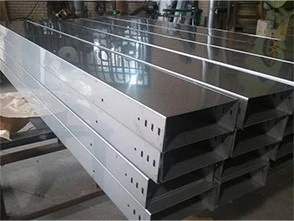
Environmental Adaptability
For outdoor, humid, and highly corrosive environments (such as chemical workshops and coastal areas), 316L stainless steel is preferred due to its salt spray resistance and corrosion resistance. For dry indoor environments (such as office buildings and computer rooms), 304 stainless steel can be used, balancing cost-effectiveness and rust resistance.
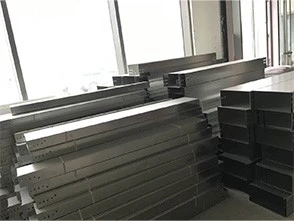
Load-Bearing Capacity
Calculated based on the total weight of the cables (including insulation). The cable tray width should have a 20%-30% redundancy (for heat dissipation and future expansion). The thickness should be adjusted according to the span-1.2-1.5mm for spans ≤ 1.5m, and 1.5-2.0mm for spans 1.5-3m, to avoid long-term deformation under heavy load.
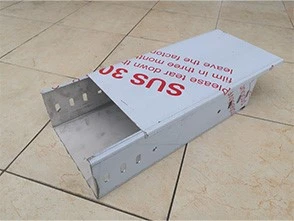
Protection Rating
For scenarios requiring dust and water protection (such as underground pipe racks or outdoor exposure), use covered trough-type cable trays; for cables requiring ventilation and heat dissipation (such as high-voltage cables), use uncovered ladder-type or tray-type cable trays, and ensure drainage holes are pre-drilled at the bottom of the tray.
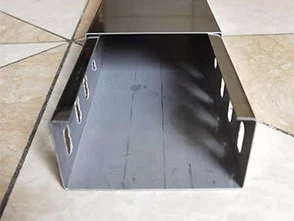
Installation Conditions
For vertical installations or installations with a significant slope (≥30°), use anti-slip accessories (such as cable clamps); when crossing firewalls or explosion-proof areas, use fire-resistant stainless steel cable trays and sealing materials to meet safety regulations.