




Hey there! As a cable tray supplier, I've gotten tons of questions about the differences between cable trays and cable ladders. So, I thought I'd sit down and break it all down for you.
Let's start with the basics. What the heck are cable trays and cable ladders anyway? Well, they're both used to support and organize electrical cables in buildings, industrial facilities, and other places where you've got a whole bunch of wires running around. But, they've got some key differences that you need to know about if you're in the market for one of these things.
Design and Structure
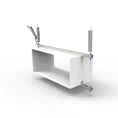
First off, let's talk about design. A cable tray is like a flat-bottomed tray with raised edges on the sides. It's usually made up of a series of interconnected sections that can be easily assembled and installed. The flat bottom provides a stable surface for cables to rest on, and the raised edges help keep the cables in place.
On the other hand, a cable ladder looks more like an actual ladder. It has two side rails connected by a series of rungs. The rungs are spaced apart, allowing cables to be laid across them. This design gives the cable ladder a more open and airy look compared to the cable tray.
The way they're structured also affects how they're installed. Cable trays are generally easier to install in tight spaces or around corners because of their flat design. You can bend and shape them to fit your needs. Cable ladders, however, are better suited for long, straight runs. They're more rigid and need more space to be installed properly.
Capacity and Loading
When it comes to how much weight they can hold, cable trays and cable ladders have different capabilities. Cable trays usually have a higher weight capacity per unit length. This is because the flat bottom distributes the weight of the cables more evenly. So, if you've got a lot of heavy cables or a high density of cables, a cable tray might be the way to go.
Cable ladders, on the other hand, are better at handling individual, larger cables. The open design of the ladder allows for better ventilation around the cables, which can be important for heat dissipation. This means that if you're dealing with high - voltage or high - power cables that generate a lot of heat, a cable ladder could be a better choice.
Material and Durability
Both cable trays and cable ladders come in a variety of materials. Common materials include steel, aluminum, and fiberglass. Steel is strong and durable, but it can be prone to rust if not properly coated. Aluminum is lightweight and corrosion - resistant, making it a good choice for outdoor applications. Fiberglass is non - conductive and resistant to chemicals, which is great for industrial environments.
In terms of durability, it really depends on the environment. If you're in a harsh, corrosive environment, a fiberglass or aluminum cable tray or ladder might be more suitable. If you need something that can withstand heavy impacts, a steel option could be better.


Cost
Cost is always a factor when you're making a decision. Generally speaking, cable trays tend to be more expensive than cable ladders. This is because of the more complex manufacturing process involved in creating the flat - bottomed design. However, the cost can also vary depending on the material, size, and weight capacity.
If you're on a tight budget and don't have extremely heavy cable loads, a cable ladder might be a more cost - effective option. But if you need the extra strength and stability of a cable tray, you might have to shell out a little more.
Applications
Now, let's talk about where you'd use each one. Cable trays are commonly used in commercial buildings, data centers, and office complexes. They're great for organizing a large number of small to medium - sized cables. For example, in a data center, you might have hundreds of Ethernet cables that need to be neatly arranged. A cable tray can provide a clean and efficient way to do that.
Cable ladders are often used in industrial settings, power plants, and outdoor installations. As I mentioned earlier, they're ideal for large, individual cables that need good ventilation. In a power plant, you might have high - voltage cables that generate a lot of heat. A cable ladder would allow the heat to dissipate more effectively.
Polymer Cable Ladder
If you're looking for a specific type of cable ladder, you might want to check out our Polymer Cable Ladder. Polymer cable ladders are made from high - quality polymers, which offer excellent corrosion resistance and are lightweight. They're perfect for outdoor and industrial applications where traditional metal ladders might not hold up as well.
Making the Right Choice
So, how do you decide whether to go for a cable tray or a cable ladder? Well, it all comes down to your specific needs. Think about the following:
- Cable Type and Quantity: If you have a lot of small cables, a cable tray might be better. For large, individual cables, a cable ladder could be the way to go.
- Installation Space: Tight spaces or areas with many bends are better suited for cable trays. Long, straight runs are ideal for cable ladders.
- Environment: Harsh, corrosive environments might require fiberglass or aluminum options. Impact - prone areas might need steel.
- Budget: If cost is a major concern, compare the prices of cable trays and cable ladders based on your requirements.
Conclusion
In the end, both cable trays and cable ladders have their own unique advantages. As a cable tray supplier, I've seen firsthand how important it is to choose the right product for your project. Whether you go for a cable tray or a cable ladder, make sure you consider all the factors we've discussed.
If you're still not sure which one is right for you, or if you have any questions about our products, don't hesitate to reach out. We're here to help you make the best decision for your cable management needs. Let's start a conversation about your project and find the perfect solution together.
References
- Electrical Installation Handbook, Schneider Electric
- National Electrical Code (NEC)