


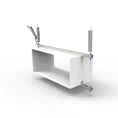


Abrasion resistance is a critical property when it comes to industrial components, especially for a channel steel base. As a dedicated channel steel base supplier, I understand the significance of this characteristic and its impact on the performance and longevity of the product. In this blog, I'll delve into what the abrasion resistance of a channel steel base is, why it matters, and how we ensure high - quality abrasion - resistant channel steel bases.


Understanding Abrasion Resistance
Abrasion resistance refers to a material's ability to withstand the wearing effect caused by friction, scraping, or rubbing against another surface. For a channel steel base, which is often used in various industrial settings such as construction, manufacturing, and infrastructure projects, it is constantly exposed to different forms of physical contact. This can include the movement of heavy machinery, the sliding of equipment, or the impact of debris.
When a channel steel base lacks sufficient abrasion resistance, it can lead to several problems. The surface of the base may start to wear down over time, resulting in a loss of structural integrity. This wear can cause the base to become uneven, which may affect the stability of the equipment or structures placed on it. Moreover, as the surface wears, there is an increased risk of corrosion, as the protective layer of the steel is compromised.
Factors Affecting Abrasion Resistance of Channel Steel Base
Material Composition
The type of steel used in the channel steel base plays a crucial role in its abrasion resistance. High - carbon steels generally offer better abrasion resistance than low - carbon steels. This is because carbon increases the hardness of the steel, making it more resistant to wear. Additionally, the presence of alloying elements such as chromium, nickel, and molybdenum can further enhance the abrasion resistance. These elements form hard carbides within the steel matrix, which act as barriers to the abrasive forces.
Heat Treatment
Heat treatment processes can significantly improve the abrasion resistance of channel steel bases. Quenching and tempering are two common heat treatment methods. Quenching involves rapidly cooling the steel from a high temperature, which results in a hard and brittle structure. Tempering is then carried out to reduce the brittleness and improve the toughness of the steel while maintaining a high level of hardness. Through proper heat treatment, the steel can achieve an optimal balance between hardness and toughness, enhancing its ability to resist abrasion.
Surface Finish
The surface finish of the channel steel base also affects its abrasion resistance. A smooth surface finish reduces the friction between the base and the contacting surfaces, minimizing the wear. Processes such as grinding, polishing, or shot - blasting can be used to achieve a smooth surface. Additionally, applying a protective coating on the surface can further enhance the abrasion resistance. Coatings such as epoxy, polyurethane, or zinc can act as a barrier between the steel and the abrasive environment.
Our Channel Steel Base Products and Abrasion Resistance
As a channel steel base supplier, we offer a wide range of products, each designed to meet different industrial needs. Our Welding Free Channel Steel Base is a popular choice for applications where quick installation and flexibility are required. This type of base is made from high - quality steel with a carefully selected composition to ensure good abrasion resistance. The absence of welding means that the base has a more uniform structure, which also contributes to its durability.
Our T - shaped Rotating Channel Steel Base is designed for applications where rotation and movement are involved. The rotating mechanism is engineered to minimize wear and tear, and the base itself is made from steel that has been heat - treated to enhance its abrasion resistance. This ensures that the base can withstand the continuous movement and friction associated with its function.
The Welding Channel Steel Base is suitable for heavy - duty applications where high strength and stability are required. We use advanced welding techniques to ensure a strong and reliable connection, and the steel used in this base is of high quality with excellent abrasion - resistant properties.
Testing and Quality Assurance
To ensure that our channel steel bases meet the highest standards of abrasion resistance, we conduct rigorous testing. We use industry - standard abrasion testing methods, such as the Taber abrasion test, to measure the wear rate of the steel. In this test, a sample of the channel steel base is subjected to a rotating abrasive wheel under a specific load for a set number of revolutions. The weight loss of the sample is then measured to determine its abrasion resistance.
In addition to abrasion testing, we also perform other quality control tests, such as hardness testing, chemical analysis, and visual inspection. These tests help us to verify the material composition, heat treatment quality, and surface finish of the channel steel bases. Only products that pass all of our quality control tests are released for sale.
Importance of Abrasion Resistance in Different Industries
Construction Industry
In the construction industry, channel steel bases are used in various applications, such as supporting building structures, scaffolding, and equipment. Abrasion resistance is crucial in this industry because the bases are often exposed to rough construction sites, where there is a lot of debris and heavy equipment movement. A channel steel base with good abrasion resistance can withstand the harsh conditions and maintain its structural integrity over time, ensuring the safety and stability of the construction projects.
Manufacturing Industry
In manufacturing plants, channel steel bases are used to support machinery and production lines. The continuous operation of the machinery can cause significant wear on the bases. If the bases do not have sufficient abrasion resistance, it can lead to frequent breakdowns and maintenance requirements, which can disrupt the production process and increase costs. Therefore, using abrasion - resistant channel steel bases is essential for the smooth operation of manufacturing facilities.
Infrastructure Projects
Infrastructure projects, such as bridges, railways, and tunnels, also rely on channel steel bases. These bases are exposed to environmental factors, such as weather conditions and traffic loads. Abrasion resistance is important in these projects to ensure the long - term durability of the infrastructure. A channel steel base with good abrasion resistance can resist the wear caused by traffic, wind, and rain, reducing the need for frequent repairs and replacements.
Contact Us for Your Channel Steel Base Needs
If you are in need of high - quality, abrasion - resistant channel steel bases, we are here to help. Our team of experts can provide you with detailed information about our products, including their specifications, performance, and application suitability. We can also offer customized solutions to meet your specific requirements. Whether you are a construction company, a manufacturer, or involved in an infrastructure project, we have the right channel steel base for you.
Contact us today to start a procurement discussion and find the best channel steel base solution for your business.
References
- ASM Handbook Volume 1: Properties and Selection: Irons, Steels, and High - Performance Alloys. ASM International.
- Callister, W. D., & Rethwisch, D. G. (2010). Materials Science and Engineering: An Introduction. Wiley.
- "Abrasion Testing of Materials" by ASTM International.