


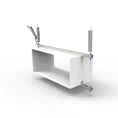


Can fiberglass cable tray be used in hazardous environments?
As a supplier of fiberglass cable trays, I often encounter inquiries from customers about the suitability of our products in hazardous environments. In this blog post, I will delve into the characteristics of fiberglass cable trays and explore whether they can meet the stringent requirements of hazardous settings.
Understanding Hazardous Environments
Hazardous environments are areas where there is a risk of explosion, fire, or other safety hazards due to the presence of flammable gases, vapors, dusts, or fibers. These environments are commonly found in industries such as oil and gas, chemical processing, mining, and pharmaceuticals. In these settings, electrical systems need to be carefully designed and installed to prevent the ignition of the hazardous substances.
Key Features of Fiberglass Cable Trays
Fiberglass cable trays are made from a composite material consisting of glass fibers embedded in a resin matrix. This combination gives them several properties that make them suitable for a wide range of applications, including hazardous environments:
- Corrosion Resistance: Fiberglass is highly resistant to corrosion, making it ideal for use in harsh chemical environments where metal cable trays would quickly deteriorate. This resistance helps to ensure the long - term integrity of the cable tray and the cables it supports.
- Non - Conductivity: Unlike metal cable trays, fiberglass cable trays are non - conductive. This property is crucial in hazardous environments where electrical conductivity could pose a risk of sparking, which might ignite flammable substances.
- Flame Resistance: Many fiberglass cable trays are manufactured with flame - retardant resins. These resins can slow down the spread of fire, providing an additional layer of safety in case of an accidental fire. The flame - retardant properties are often tested and certified according to industry standards such as UL 94.
- Lightweight: Fiberglass cable trays are relatively lightweight compared to metal counterparts. This makes them easier to install, especially in large - scale projects or in areas where weight limitations are a concern.
Applications in Hazardous Environments
The unique properties of fiberglass cable trays make them suitable for a variety of hazardous environments:
- Chemical Plants: In chemical plants, where corrosive chemicals are present, fiberglass cable trays can protect cables from chemical attack. The non - conductive nature also reduces the risk of electrical interference and potential ignition sources. Our Fiberglass Trough Type Cable Tray is a popular choice for these applications, as it provides a closed - top design that offers additional protection for cables.
- Oil and Gas Refineries: These facilities often have areas with flammable gases and vapors. Fiberglass cable trays with flame - retardant properties can help prevent the spread of fire in case of an explosion or fire incident. The Fiberglass Ladder Type Cable Tray is commonly used in refineries due to its high strength - to - weight ratio and good ventilation for cables.
- Mining Operations: Mines can have dust - filled environments where the risk of dust explosions is significant. Fiberglass cable trays can be used to support cables in these areas, as they are non - conductive and can be designed to be resistant to abrasion from the movement of mining equipment. Our Fiberglass Tray Type Cable Tray is a practical option for mining applications, offering a flat surface for cable support.
Compliance with Standards
When using fiberglass cable trays in hazardous environments, it is essential to ensure that they comply with relevant industry standards. These standards are designed to ensure the safety and performance of the cable trays in specific hazardous conditions. For example, in the United States, the National Electrical Code (NEC) has specific requirements for electrical installations in hazardous locations. Fiberglass cable trays should be tested and certified to meet these requirements, such as being rated for use in Class I, Division 1 or 2, or Class II, Division 1 or 2 environments, depending on the type of hazardous substances present.


Advantages Over Other Materials
Compared to traditional metal cable trays, fiberglass cable trays offer several advantages in hazardous environments:
- Reduced Maintenance: Due to their corrosion resistance, fiberglass cable trays require less maintenance over their lifespan. This can result in significant cost savings, especially in large - scale industrial applications.
- Flexibility in Design: Fiberglass can be molded into various shapes and sizes, allowing for customized cable tray designs to fit specific installation requirements. This flexibility is particularly useful in complex industrial layouts.
- Lower Risk of Contamination: In industries where product purity is crucial, such as the pharmaceutical industry, the non - corroding and non - shedding nature of fiberglass cable trays reduces the risk of contamination of the products.
Limitations and Considerations
While fiberglass cable trays have many advantages, there are also some limitations and considerations to keep in mind:
- Temperature Limitations: Fiberglass cable trays have a limited temperature range compared to some metal materials. In extremely high - temperature environments, the mechanical properties of fiberglass may degrade, which could affect the performance of the cable tray.
- UV Resistance: If the cable trays are exposed to direct sunlight for extended periods, the UV rays can cause the surface of the fiberglass to degrade over time. However, many manufacturers offer UV - resistant coatings to mitigate this issue.
- Impact Resistance: Fiberglass is less impact - resistant than metal. In areas where there is a high risk of physical impact, such as in heavy - machinery areas, additional protection or reinforcement may be required.
Conclusion
In conclusion, fiberglass cable trays can be effectively used in hazardous environments. Their corrosion resistance, non - conductivity, flame resistance, and other properties make them a viable alternative to traditional metal cable trays. However, it is crucial to carefully assess the specific requirements of the hazardous environment, including the type of hazardous substances present, temperature conditions, and potential physical impacts. By choosing the right type of fiberglass cable tray, such as our Fiberglass Trough Type Cable Tray, Fiberglass Ladder Type Cable Tray, or Fiberglass Tray Type Cable Tray, and ensuring compliance with relevant standards, you can enhance the safety and reliability of your electrical systems in hazardous settings.
If you are interested in learning more about our fiberglass cable trays for hazardous environments or would like to discuss your specific requirements, please feel free to contact us. We are committed to providing high - quality products and professional solutions to meet your needs.
References
- National Fire Protection Association (NFPA). National Electrical Code (NEC).
- Underwriters Laboratories (UL). UL 94 Standard for Tests for Flammability of Plastic Materials for Parts in Devices and Appliances.