


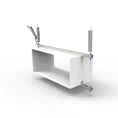


As a supplier of fiberglass cable trays, I often encounter inquiries from clients in the marine industry regarding the suitability of our products for their specific needs. The marine environment presents unique challenges, including exposure to saltwater, high humidity, strong winds, and corrosive elements. In this blog post, I will delve into the characteristics of fiberglass cable trays and explore whether they are a viable option for marine applications.
Understanding Fiberglass Cable Trays
Fiberglass cable trays are constructed from a composite material made of glass fibers and a resin matrix. This combination results in a product that offers several advantages over traditional metal cable trays, such as steel or aluminum. Some of the key features of fiberglass cable trays include:


Corrosion Resistance
One of the most significant benefits of fiberglass cable trays is their excellent corrosion resistance. Unlike metal cable trays, which can rust and corrode when exposed to moisture and saltwater, fiberglass is inherently resistant to these elements. This makes it an ideal choice for marine environments, where corrosion can significantly reduce the lifespan of cable management systems.
Lightweight
Fiberglass cable trays are much lighter than their metal counterparts, which makes them easier to install and handle. This is particularly important in marine applications, where weight restrictions and ease of installation are critical factors. The lightweight nature of fiberglass cable trays also reduces the load on structures and supports, which can help to extend their lifespan.
High Strength
Despite their lightweight, fiberglass cable trays are incredibly strong and durable. They can withstand heavy loads and extreme weather conditions, making them suitable for use in a wide range of marine applications. The high strength of fiberglass cable trays also ensures that they can provide reliable support for cables and wiring, even in harsh environments.
Electrical Insulation
Fiberglass is an excellent electrical insulator, which means that fiberglass cable trays can help to prevent electrical interference and short circuits. This is particularly important in marine applications, where electrical systems are often exposed to moisture and saltwater, which can increase the risk of electrical problems.
Fire Resistance
Many fiberglass cable trays are designed to be fire-resistant, which can help to prevent the spread of fire in the event of an emergency. This is an important safety feature in marine environments, where the risk of fire can be high due to the presence of flammable materials and electrical systems.
Challenges of the Marine Environment
The marine environment presents several challenges that can affect the performance and lifespan of cable management systems. Some of the key challenges include:
Saltwater Exposure
Saltwater is highly corrosive and can cause significant damage to metal cable trays over time. The constant exposure to saltwater can lead to rust, corrosion, and degradation of the cable tray, which can compromise its structural integrity and reduce its lifespan.
High Humidity
The high humidity levels in marine environments can also contribute to the corrosion of metal cable trays. Moisture can accumulate on the surface of the cable tray, which can accelerate the corrosion process and lead to the formation of rust and other corrosion products.
Strong Winds
Marine environments are often subject to strong winds, which can exert significant forces on cable management systems. The wind can cause the cable tray to vibrate, which can lead to fatigue and damage over time. In addition, strong winds can also blow debris onto the cable tray, which can cause damage to the cables and wiring.
Temperature Extremes
Marine environments can experience significant temperature variations, ranging from extreme heat to freezing cold. These temperature extremes can affect the performance and lifespan of cable management systems, as different materials expand and contract at different rates. This can lead to stress and damage to the cable tray, which can compromise its structural integrity and reduce its lifespan.
Can Fiberglass Cable Trays Withstand the Marine Environment?
Based on the characteristics of fiberglass cable trays and the challenges of the marine environment, it is clear that fiberglass cable trays are well-suited for use in marine applications. The corrosion resistance of fiberglass makes it an ideal choice for environments where saltwater and high humidity are present, as it can prevent rust and corrosion from damaging the cable tray. The lightweight nature of fiberglass cable trays also makes them easier to install and handle in marine environments, where weight restrictions and ease of installation are critical factors.
In addition, the high strength and durability of fiberglass cable trays make them capable of withstanding the extreme weather conditions and heavy loads that are common in marine applications. The electrical insulation properties of fiberglass also help to prevent electrical interference and short circuits, which is particularly important in marine environments where electrical systems are often exposed to moisture and saltwater.
Furthermore, many fiberglass cable trays are designed to be fire-resistant, which can help to prevent the spread of fire in the event of an emergency. This is an important safety feature in marine environments, where the risk of fire can be high due to the presence of flammable materials and electrical systems.
Types of Fiberglass Cable Trays for Marine Applications
As a supplier of fiberglass cable trays, we offer a variety of products that are specifically designed for use in marine environments. Some of the most popular types of fiberglass cable trays for marine applications include:
Fiberglass Tray Type Cable Tray
Fiberglass tray type cable trays are a popular choice for marine applications due to their versatility and durability. They are designed to provide a flat surface for supporting cables and wiring, and they can be easily customized to meet the specific requirements of each project. Fiberglass tray type cable trays are available in a variety of sizes and configurations, and they can be used in both indoor and outdoor marine applications.
Fiberglass Trough Type Cable Tray
Fiberglass trough type cable trays are another popular option for marine applications. They are designed to provide a protected environment for cables and wiring, and they can be used to prevent damage from moisture, saltwater, and other corrosive elements. Fiberglass trough type cable trays are available in a variety of sizes and configurations, and they can be used in both indoor and outdoor marine applications.
Fiberglass Ladder Type Cable Tray
Fiberglass ladder type cable trays are a lightweight and cost-effective option for marine applications. They are designed to provide a strong and stable support structure for cables and wiring, and they can be used in both indoor and outdoor marine applications. Fiberglass ladder type cable trays are available in a variety of sizes and configurations, and they can be easily customized to meet the specific requirements of each project.
Conclusion
In conclusion, fiberglass cable trays are a viable option for use in marine environments. Their corrosion resistance, lightweight, high strength, electrical insulation, and fire resistance make them well-suited for the challenges of the marine environment. As a supplier of fiberglass cable trays, we offer a variety of products that are specifically designed for use in marine applications, including Fiberglass Tray Type Cable Tray, Fiberglass Trough Type Cable Tray, and Fiberglass Ladder Type Cable Tray.
If you are considering using fiberglass cable trays in your marine project, we encourage you to contact us to discuss your specific requirements. Our team of experts can provide you with detailed information about our products and help you select the best solution for your needs. We look forward to working with you to ensure the success of your marine project.
References
- ASCE. (2017). Minimum Design Loads and Associated Criteria for Buildings and Other Structures. ASCE/SEI 7-16.
- ASTM. (2019). Standard Specification for Fiberglass Reinforced Plastic (FRP) Structural Profiles. ASTM D2996-19.
- NACE. (2017). Corrosion Control in the Marine Environment. NACE International.